
Oconee Hill Cemetery, Athens, Georgia
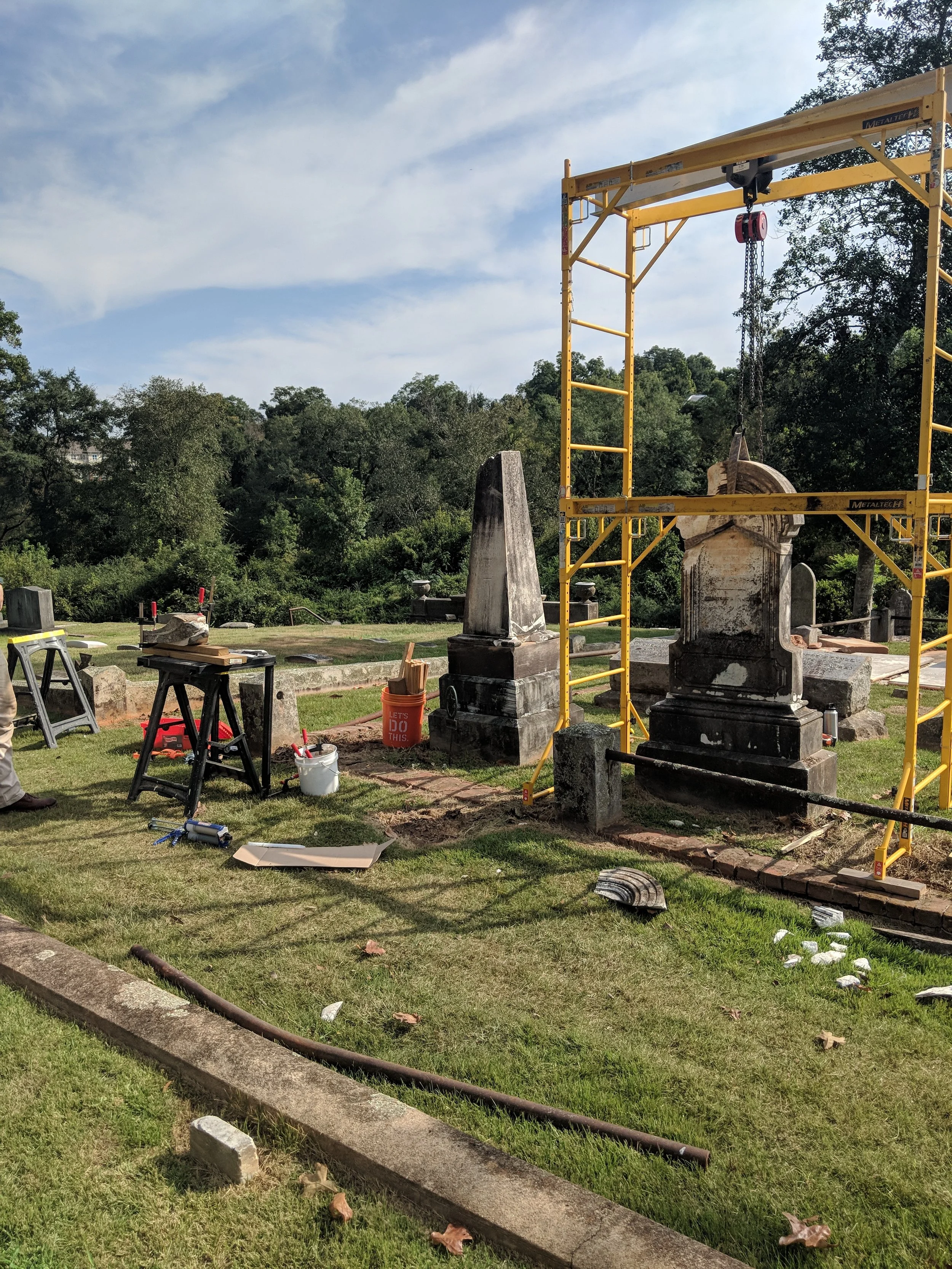
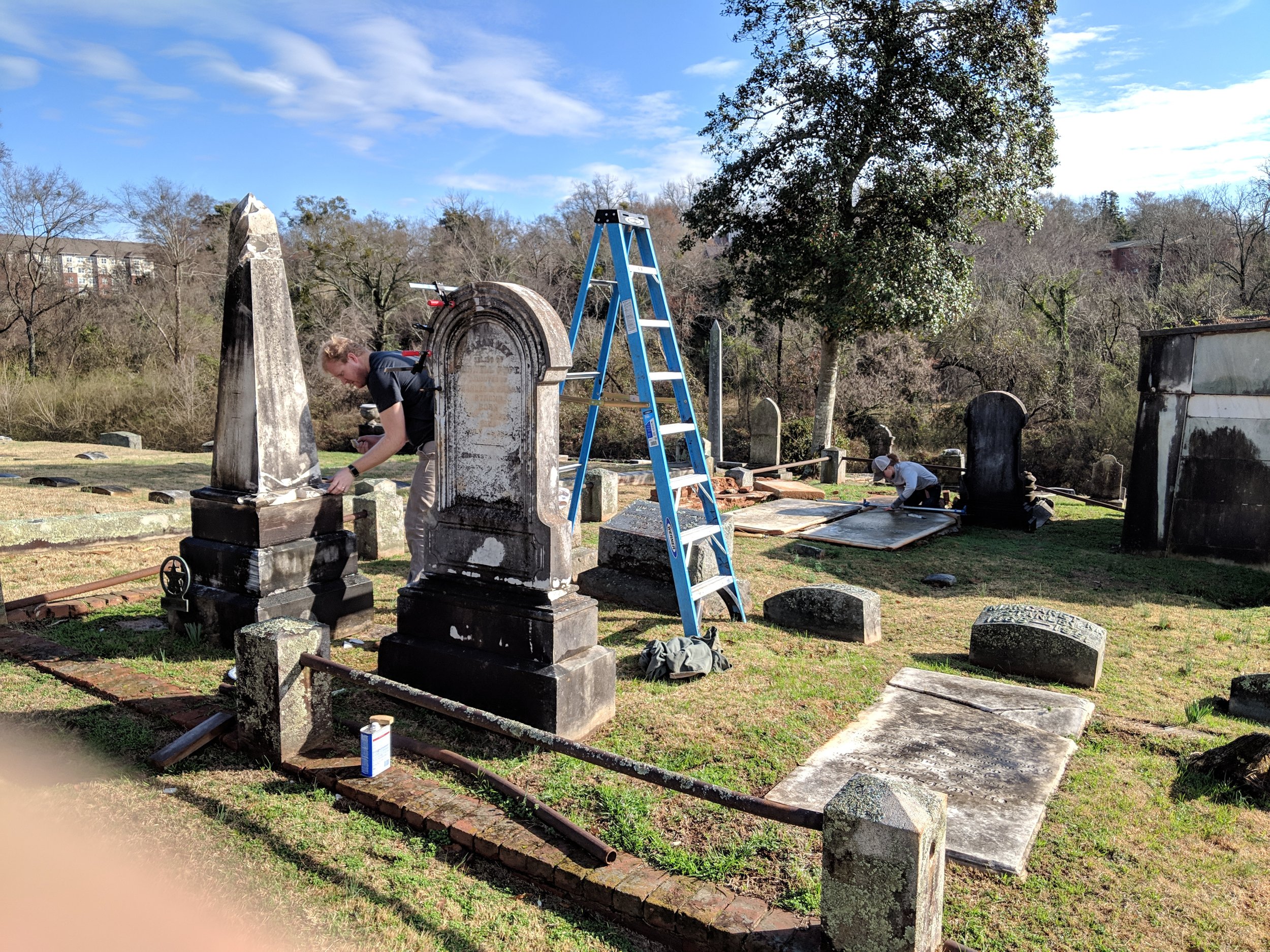
We have had the privilege of working at Oconee Hill Cemetery in Athens, Georgia, on numerous projects beginning in 2018 and most recently in 2022. From routine cleanings to complex structural repairs and crane-assisted restorations, the site reflects the wide range of preservation work we undertake.
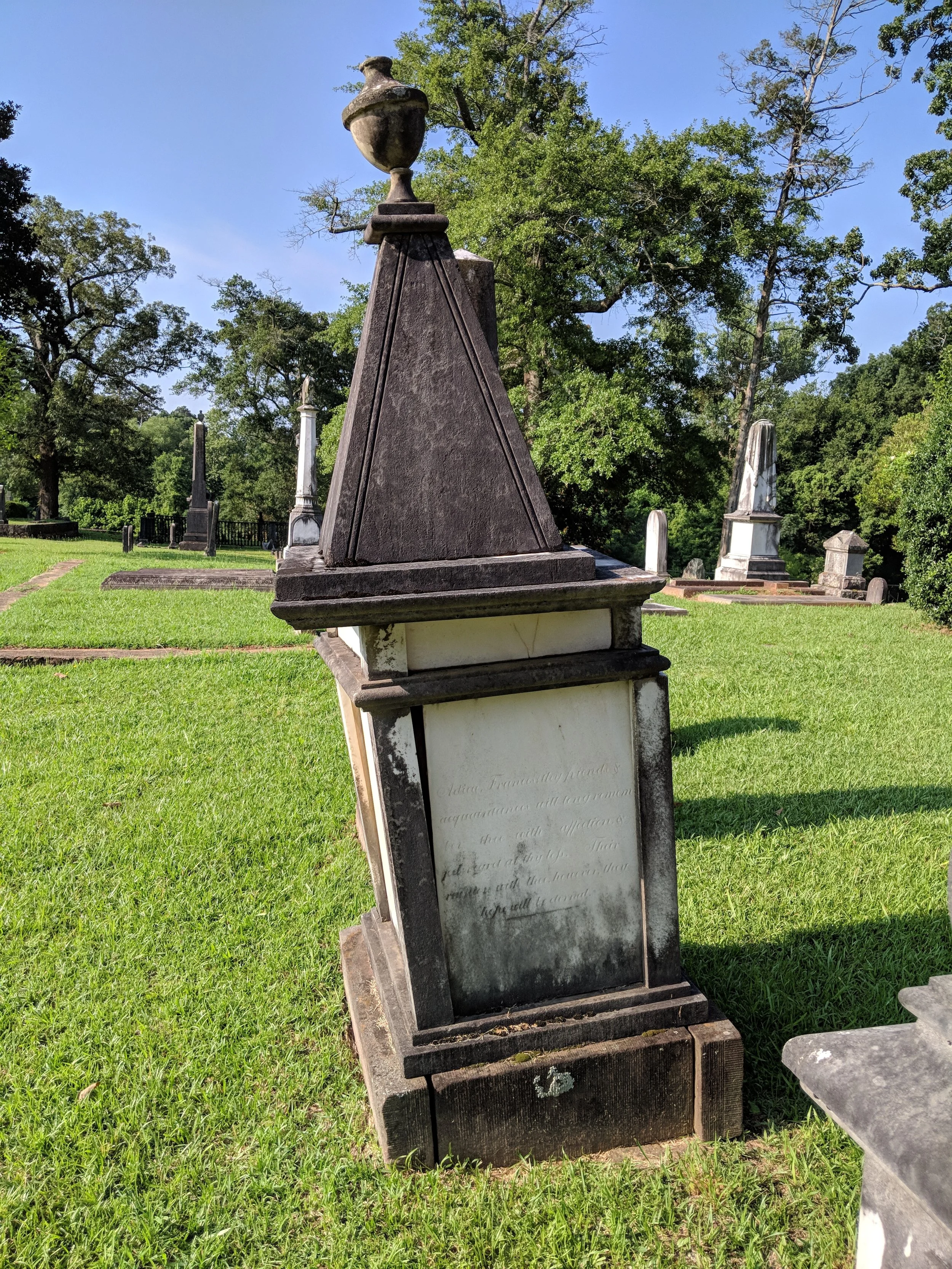
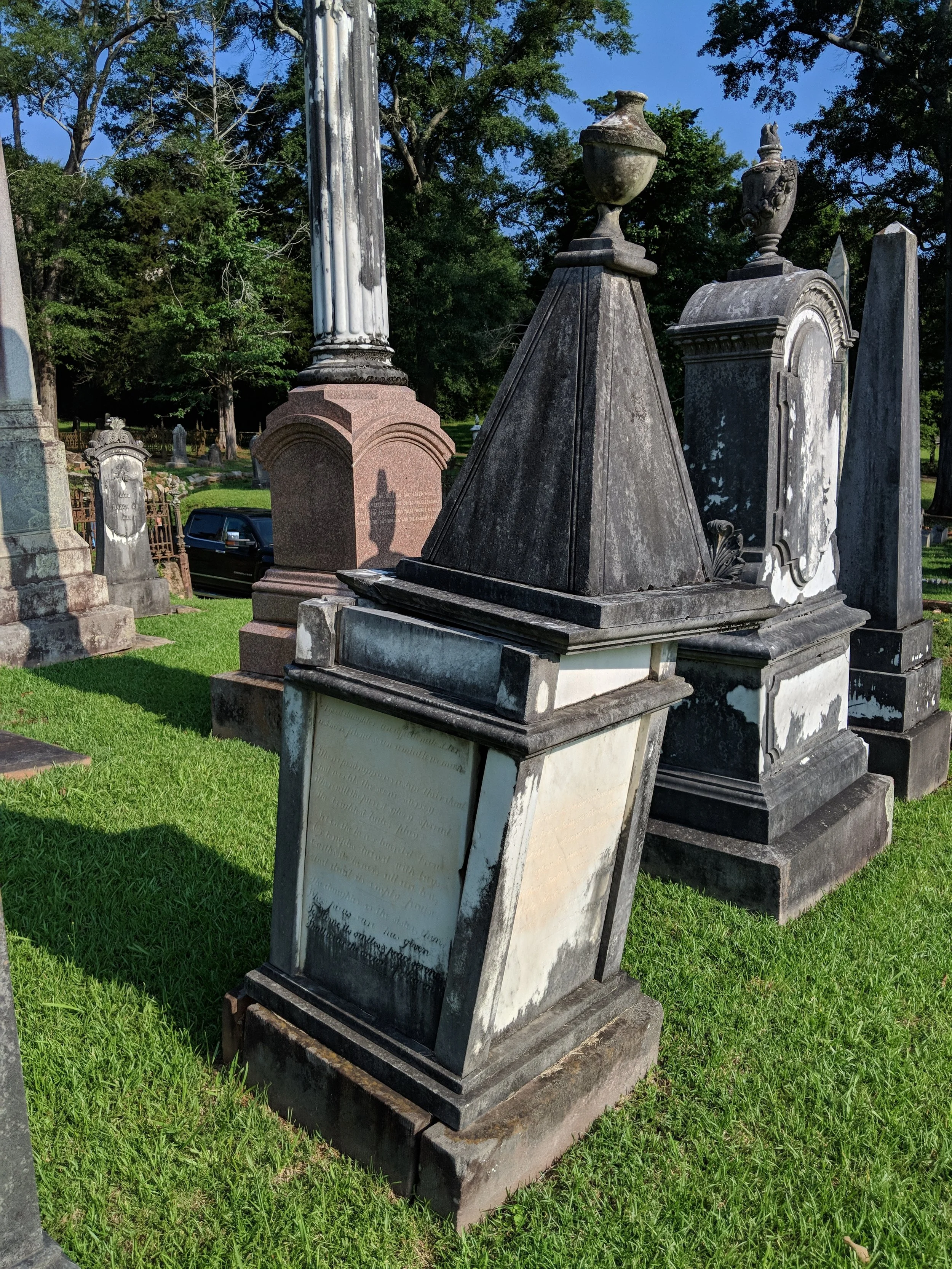
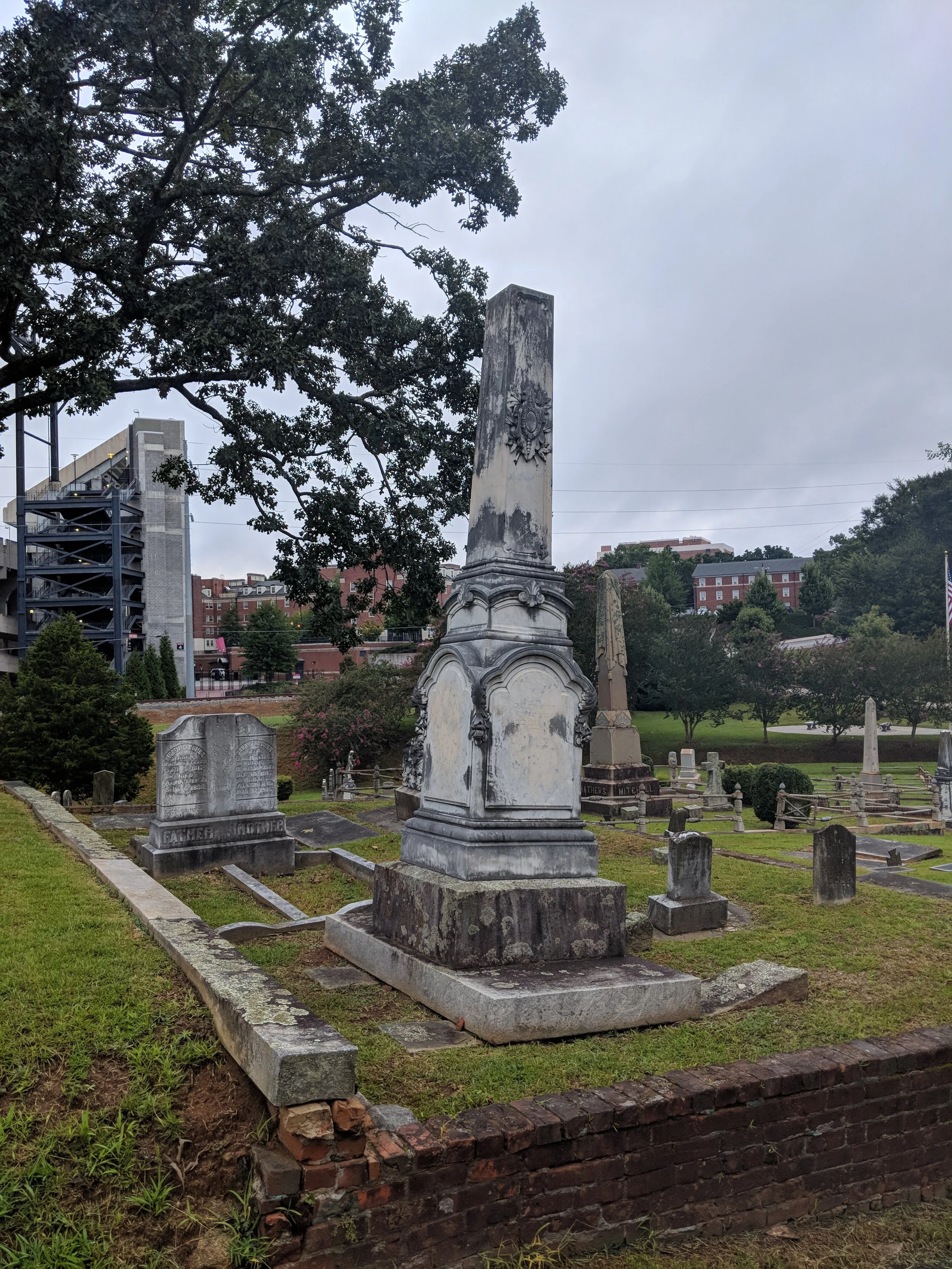
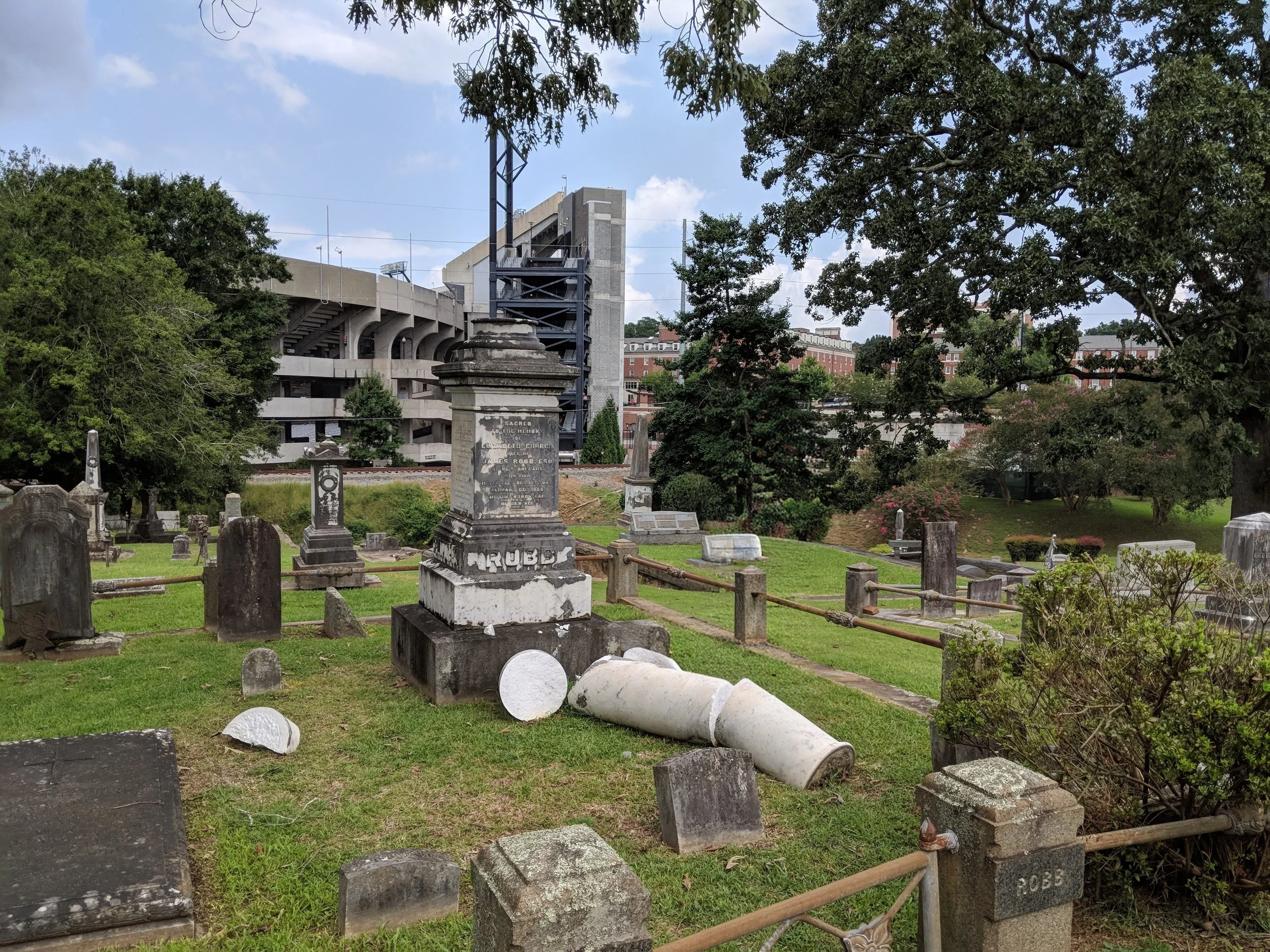
During early visits, we not only cleaned markers but also began discussions with cemetery staff and descendants about hazardous headstones and future restoration priorities. Tree damage, soil movement, and long-term weathering had left some monuments broken, many leaning, and others at risk of failure. Recognizing that not all work could—or needed to—be completed at once, we collaborated with stakeholders to prioritize projects within available budgets.Our primary focus was stabilizing severely leaning monuments, as these posed immediate safety risks. These ranged from small headstones to large, multi-piece columns over 20 feet tall.
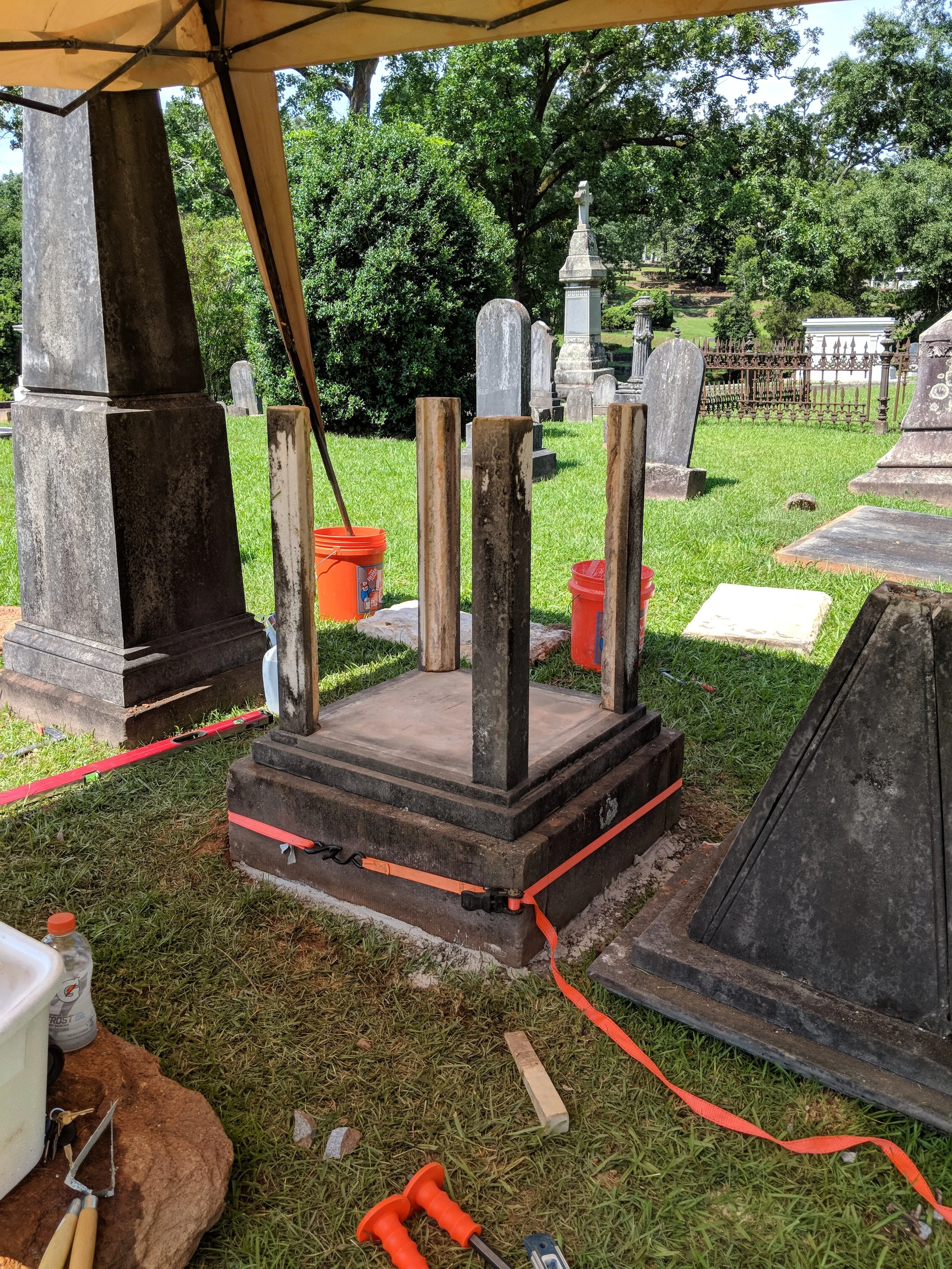
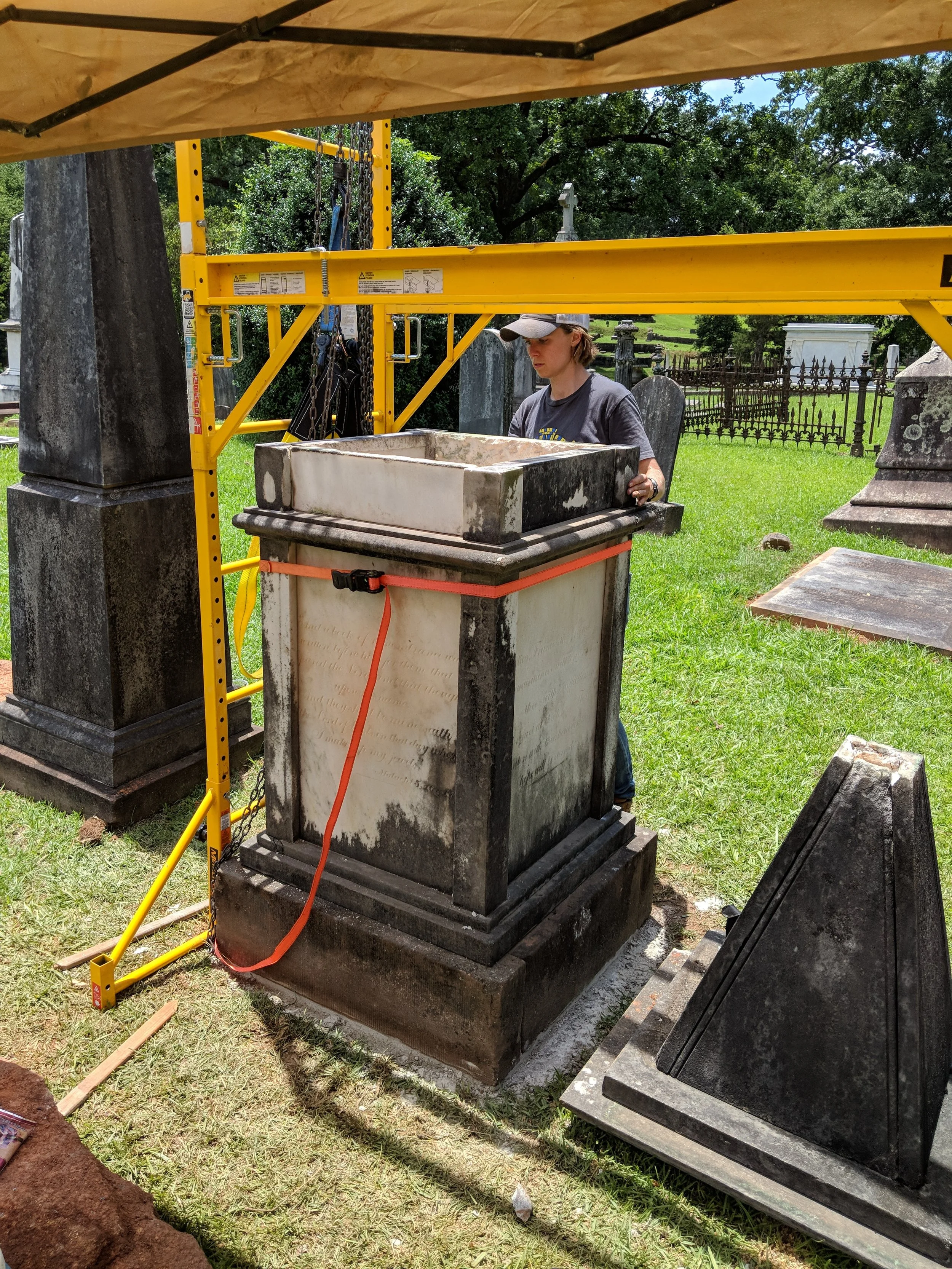
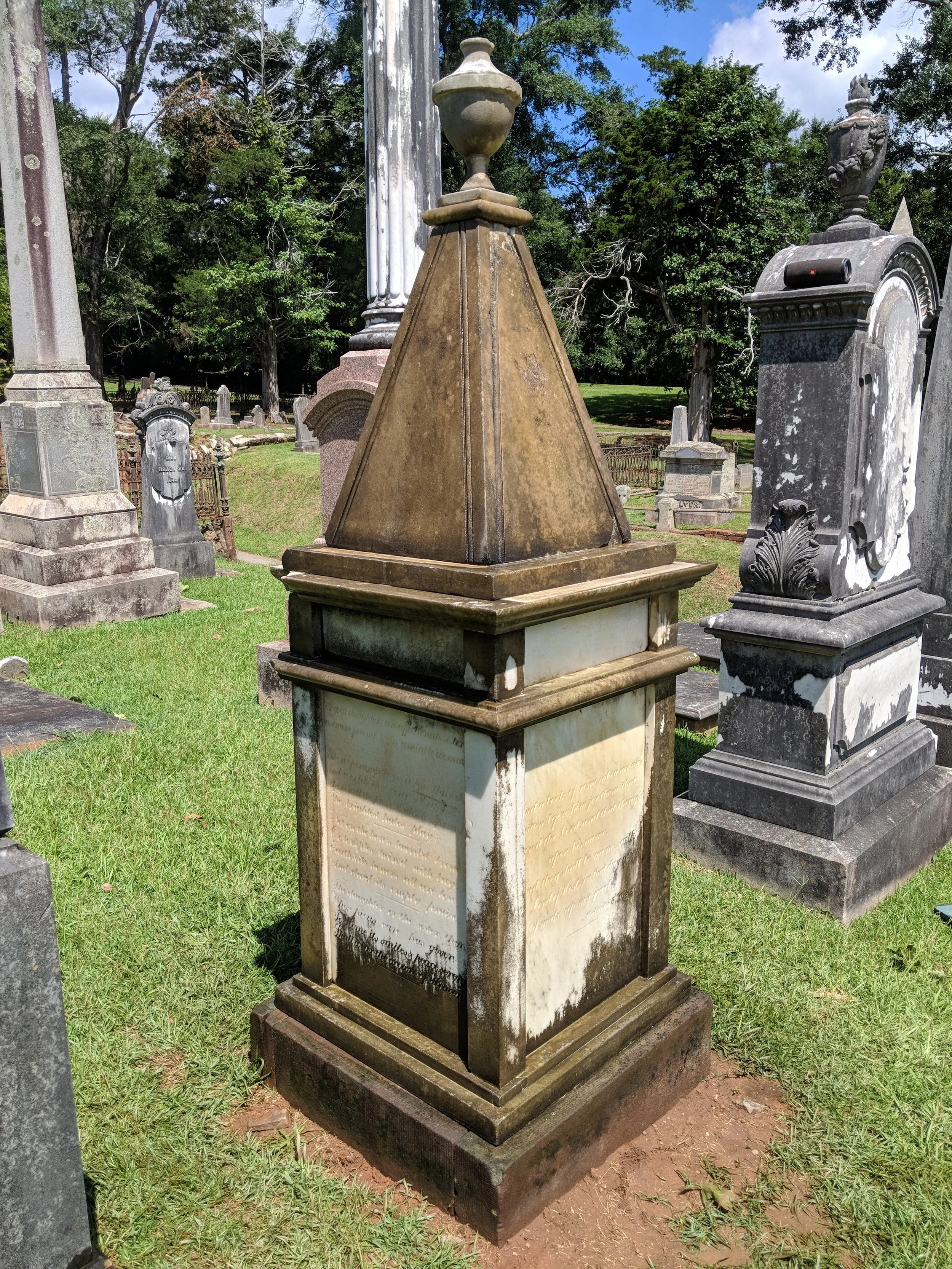
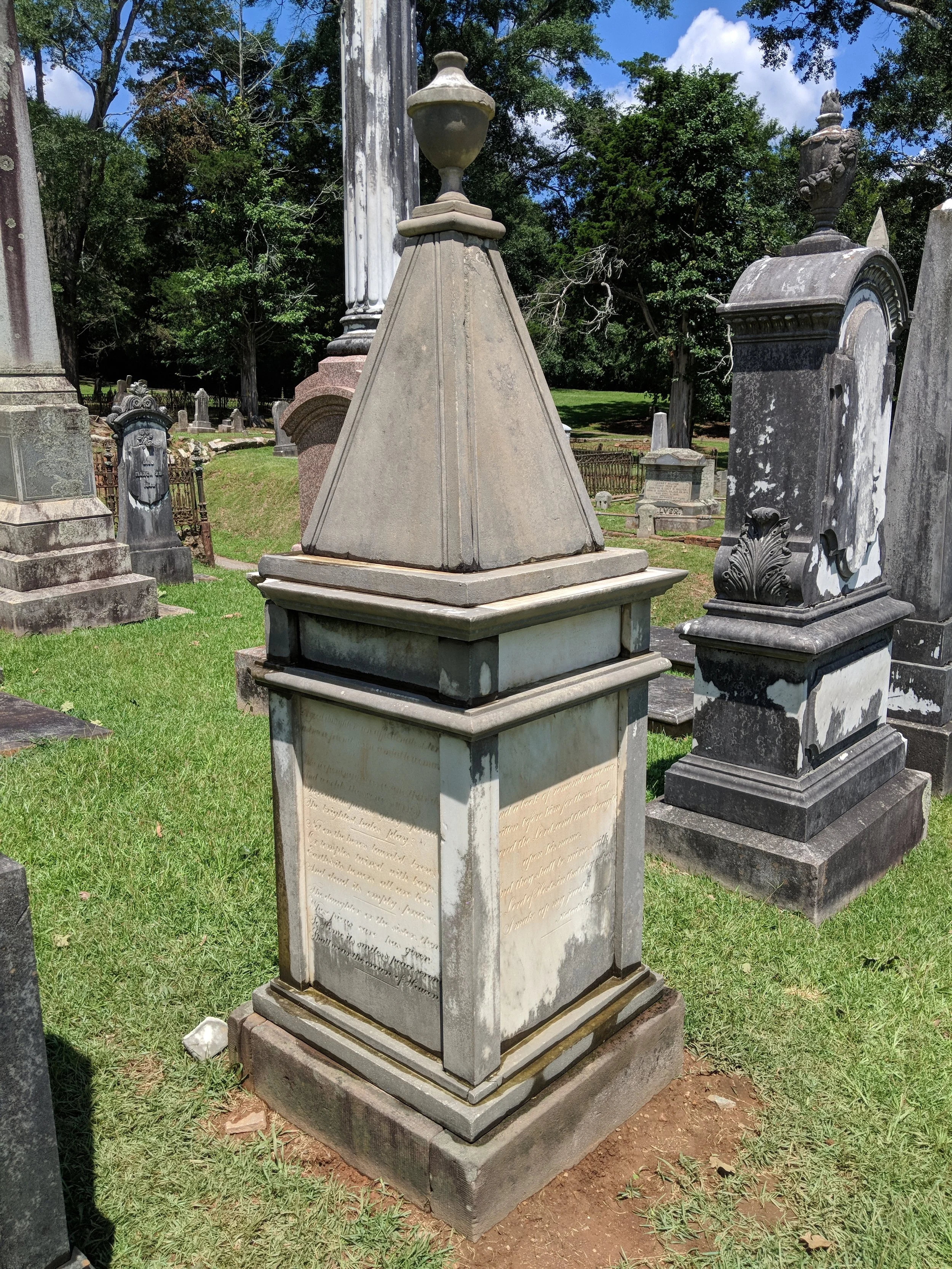
We began with smaller monuments, including a multi-piece column topped with a pyramid cap.As visible in project documentation, these monuments are often composed of multiple stacked stone elements. We used lime-based mortar and non-corrosive pins inserted into pre-existing holes to reassemble components. Using ratchet straps, clamps, and wood bracing, we rebuilt each monument layer by layer, allowing proper curing between stages. As work progressed, the structural integrity of each piece was gradually restored.
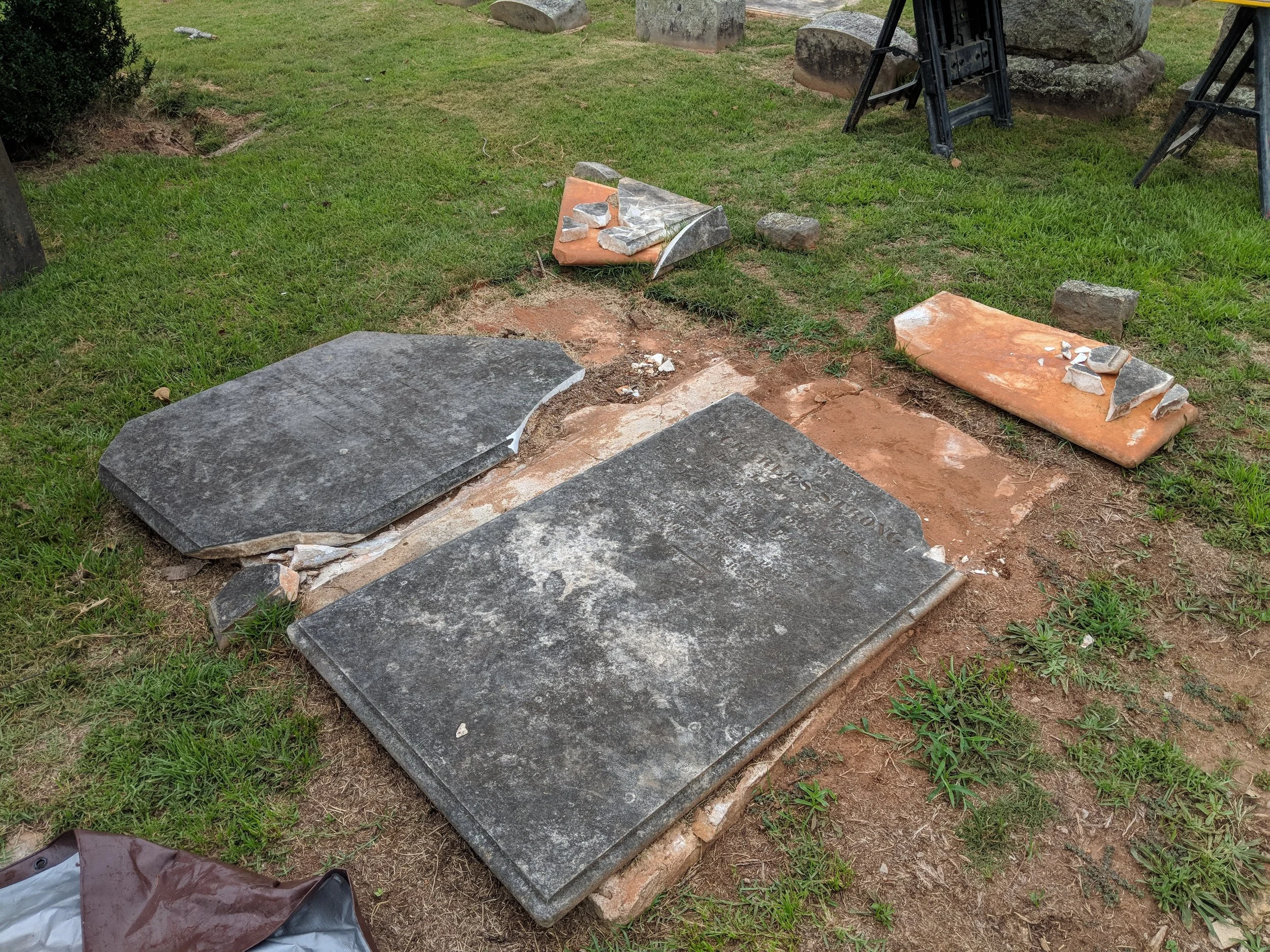
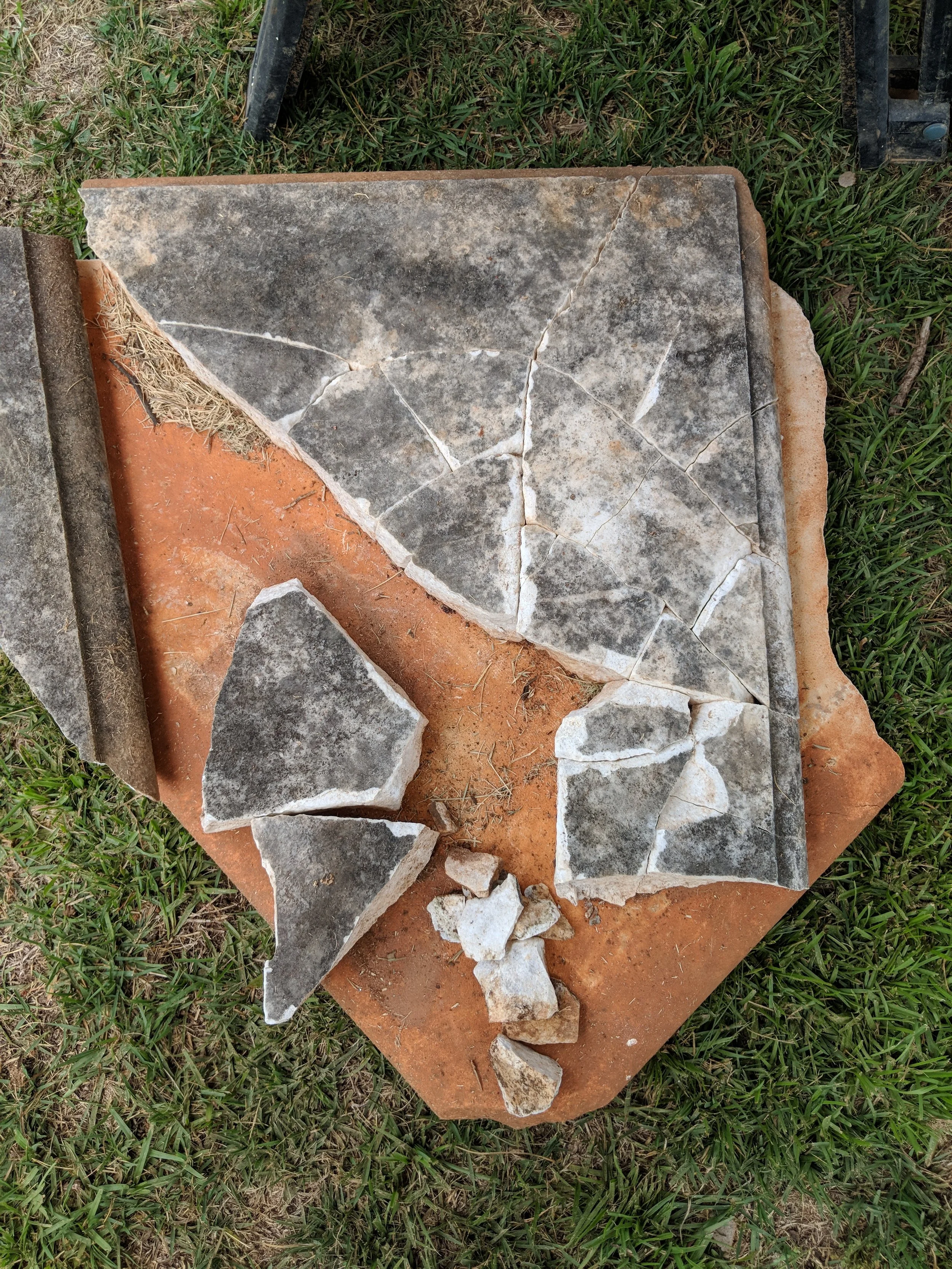
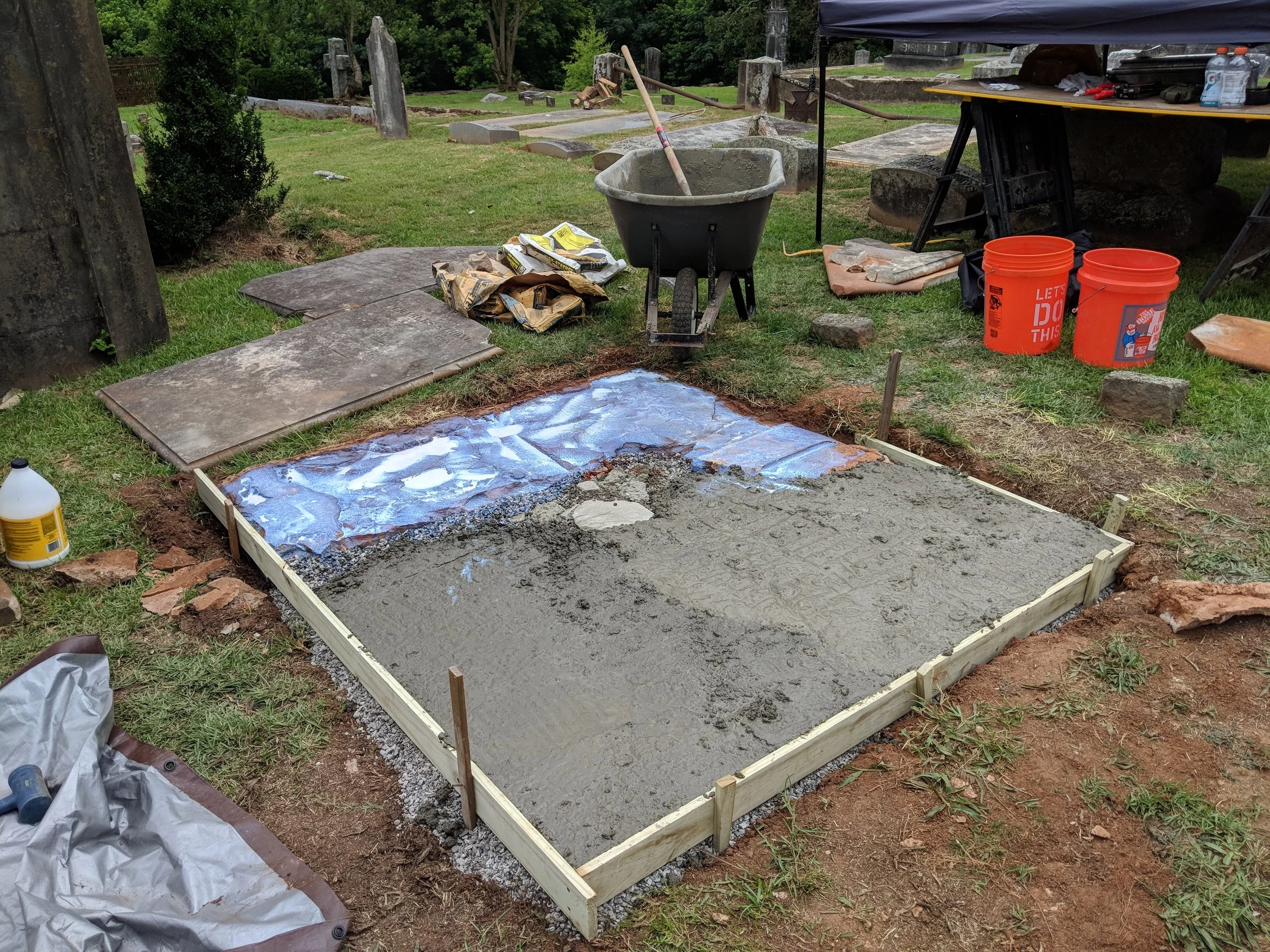
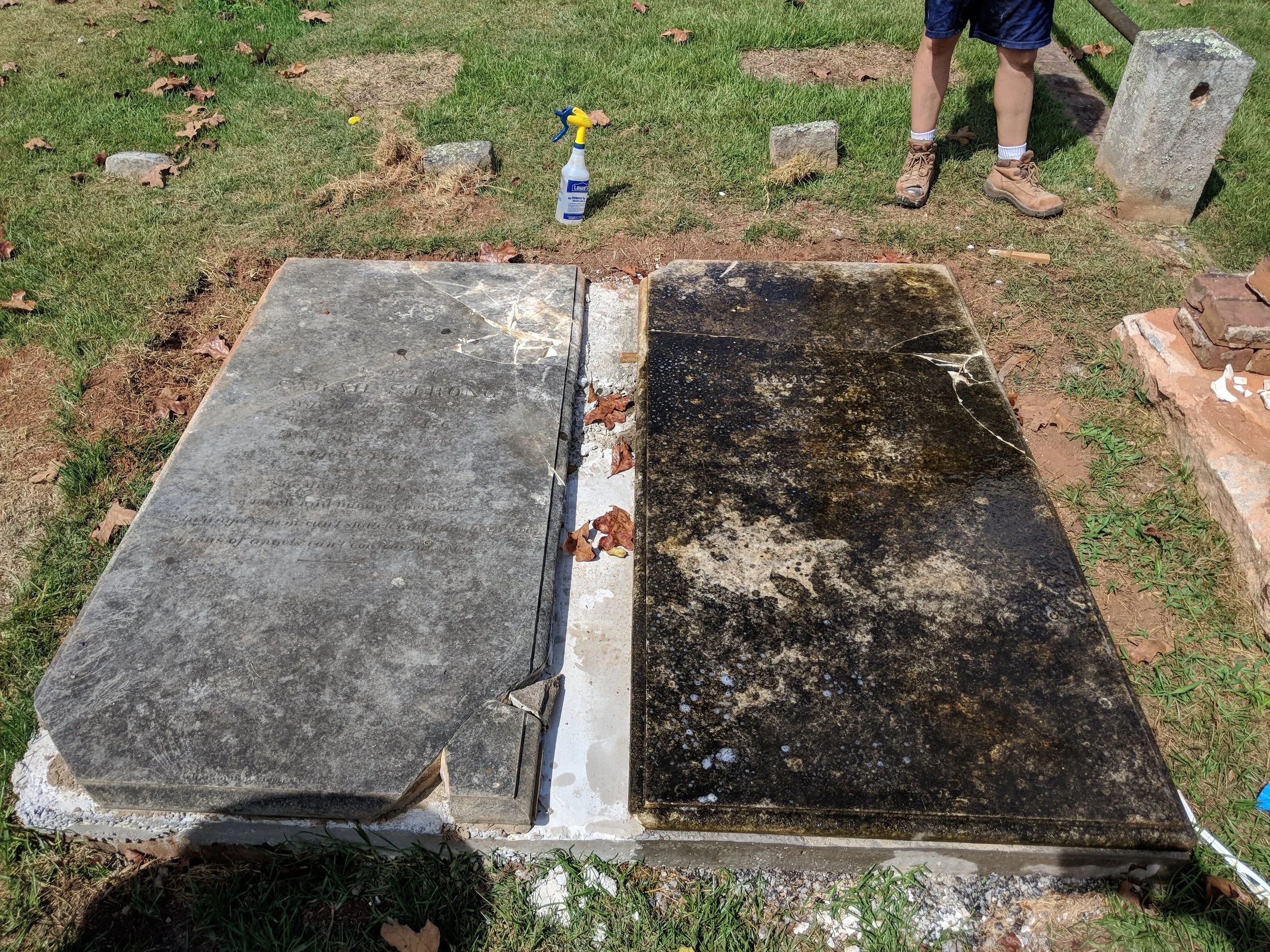
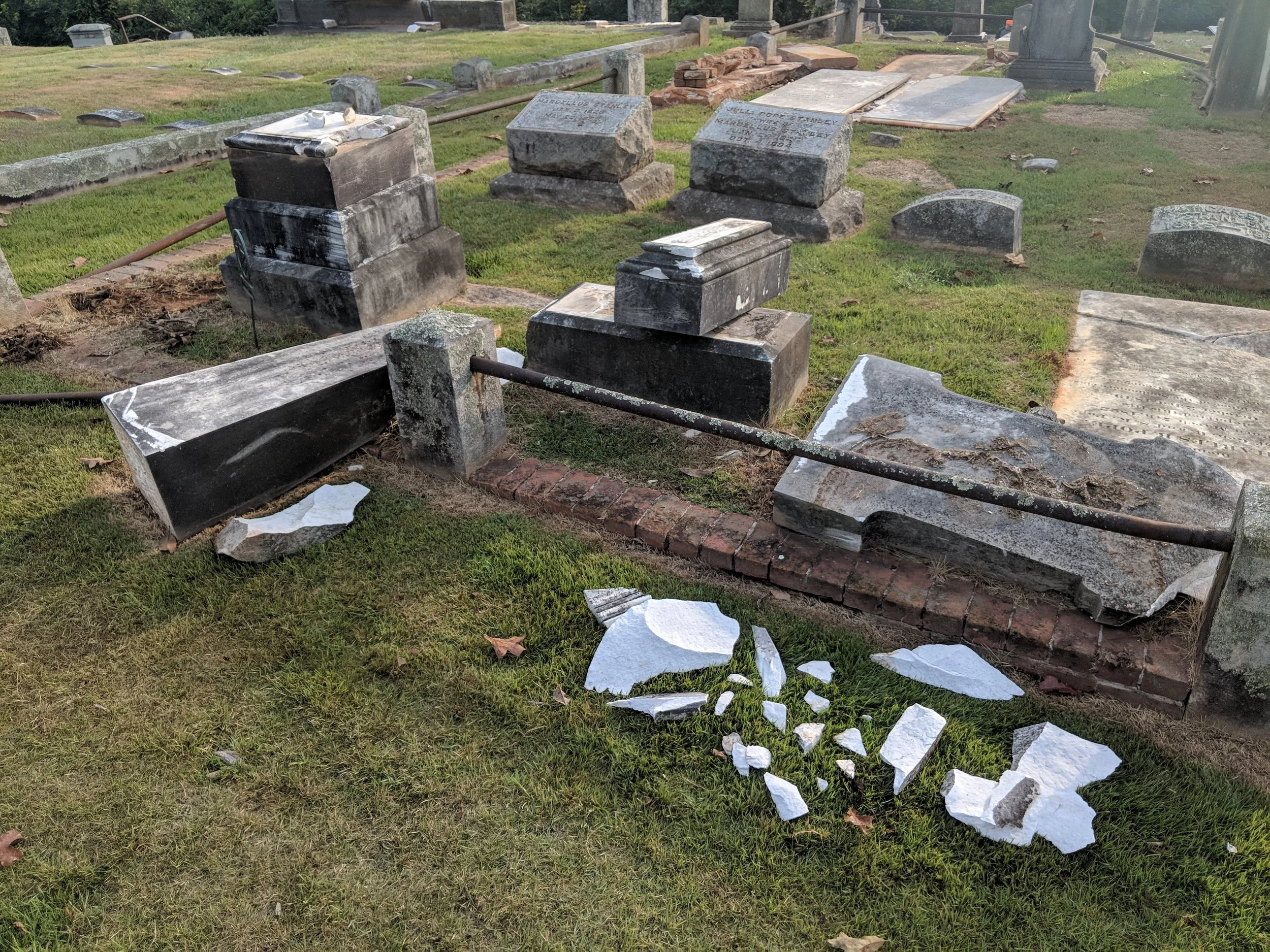
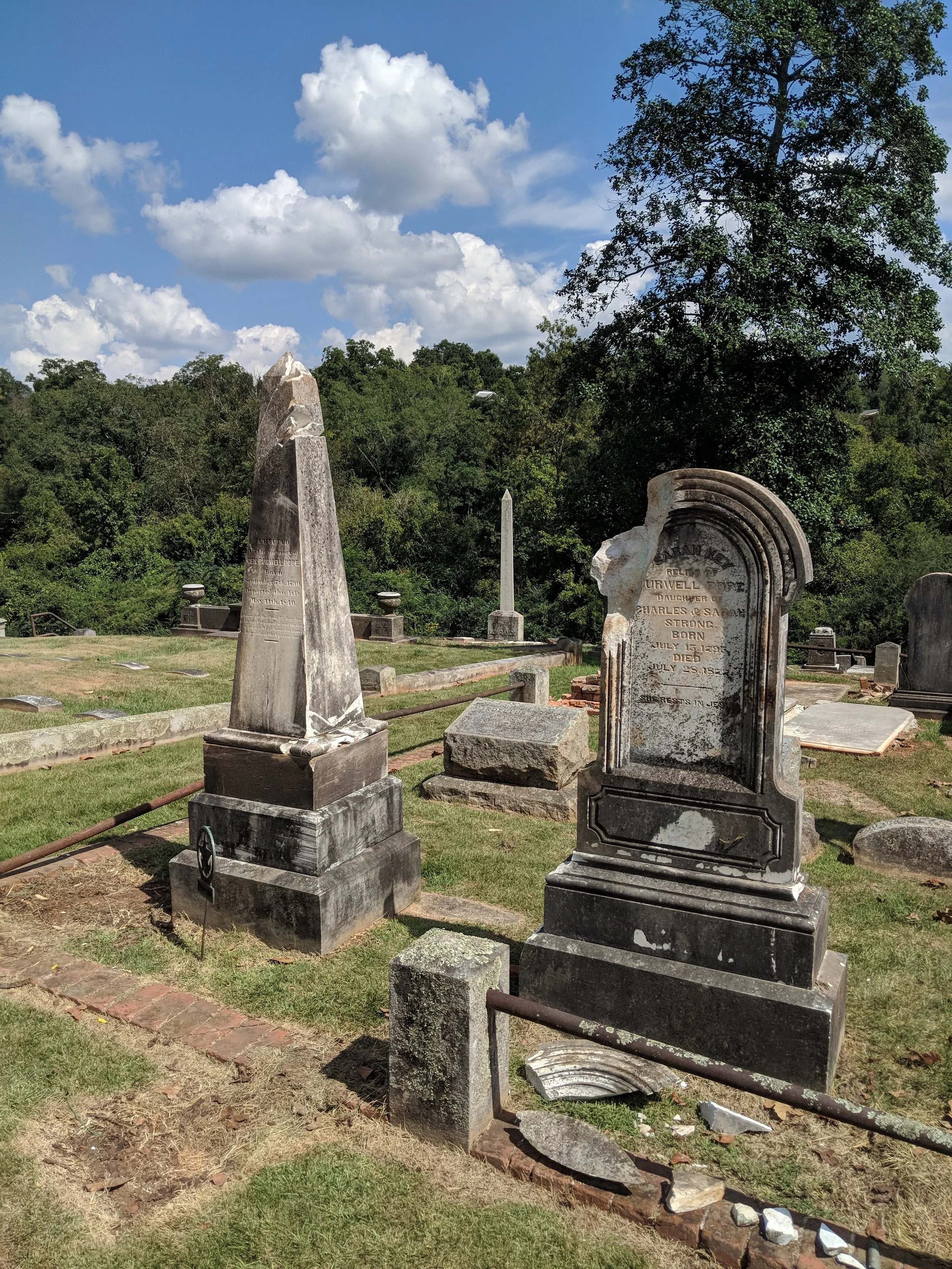
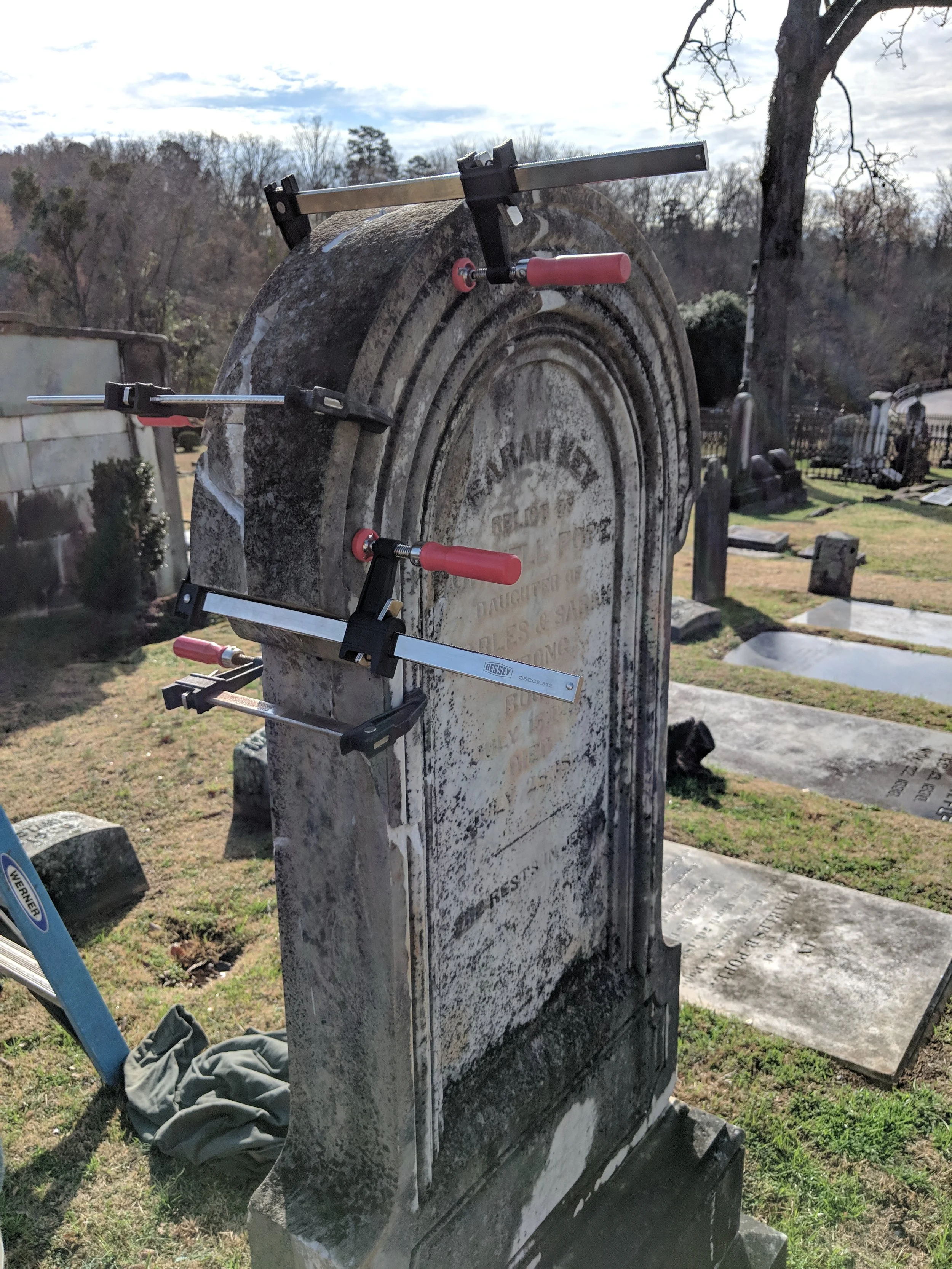
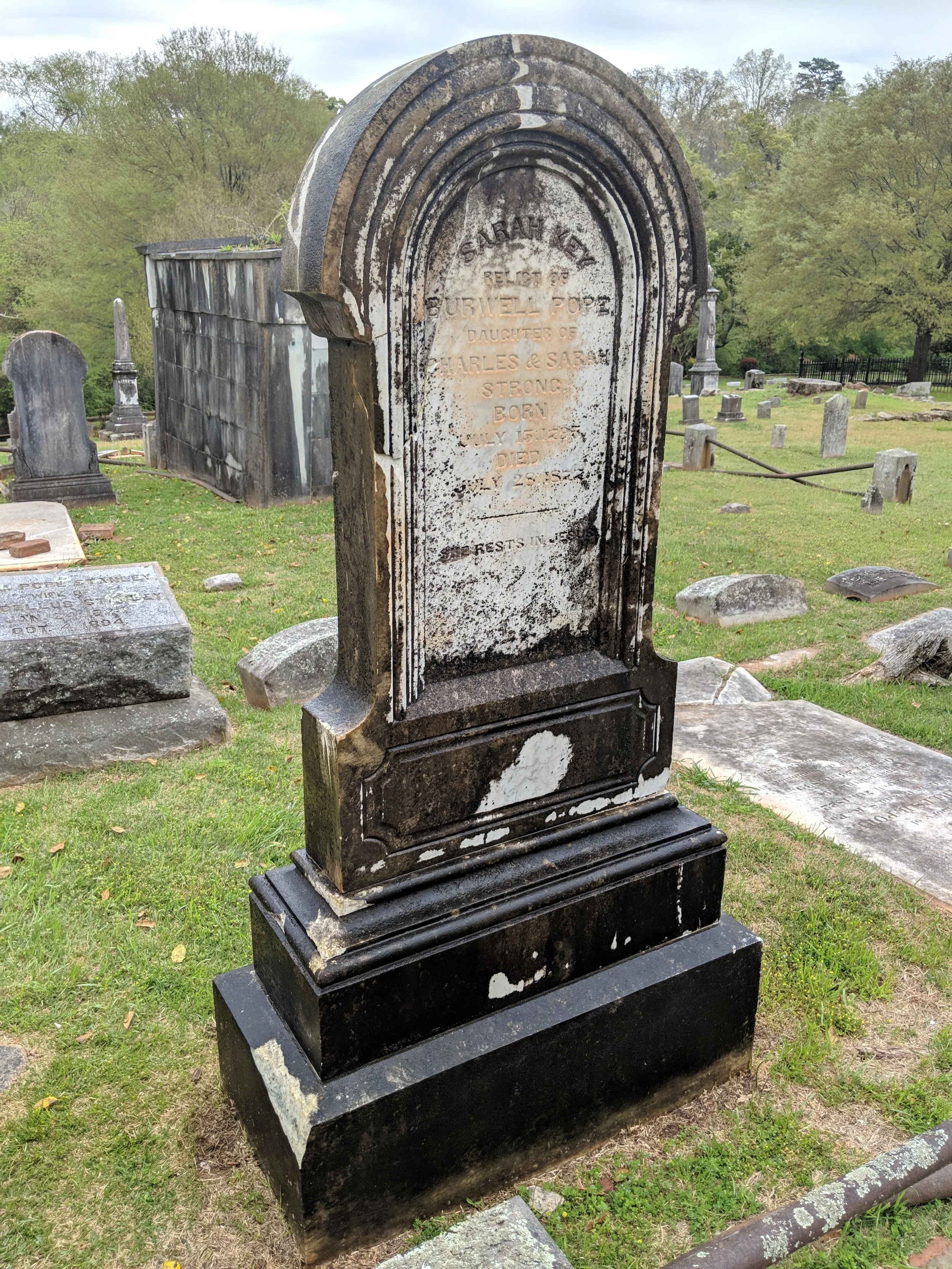
In a subsequent visit, we repaired the markers of War of 1812 General Burwell Pope and his wife, Sarah Key, after their marble headstones were shattered by a fallen tree. Reconstruction required careful alignment of numerous fragments. We installed a new concrete pad for the ledger stones and used clamps, epoxy, and color-matched lime mortar to reconstruct both the horizontal and upright elements.
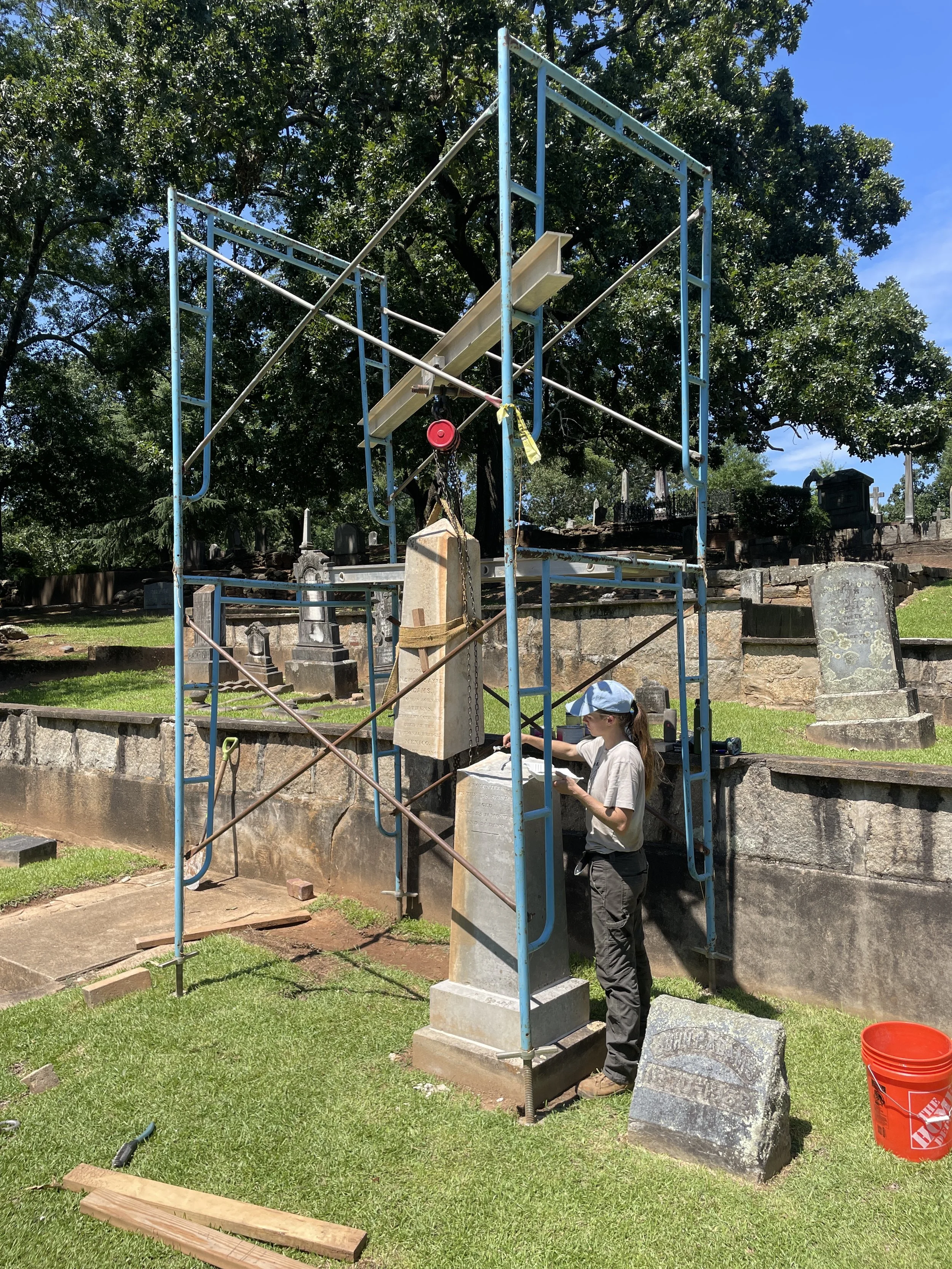
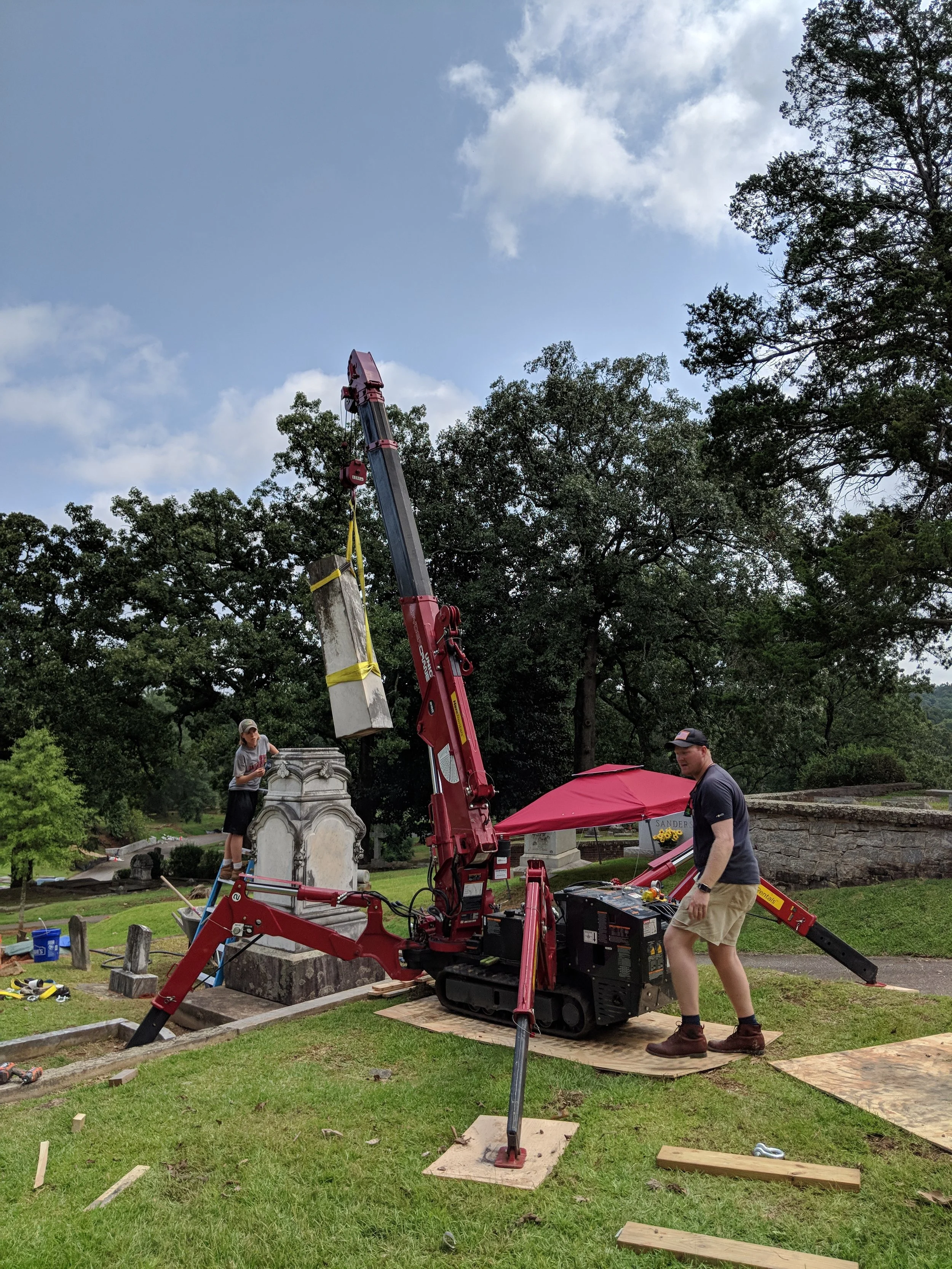
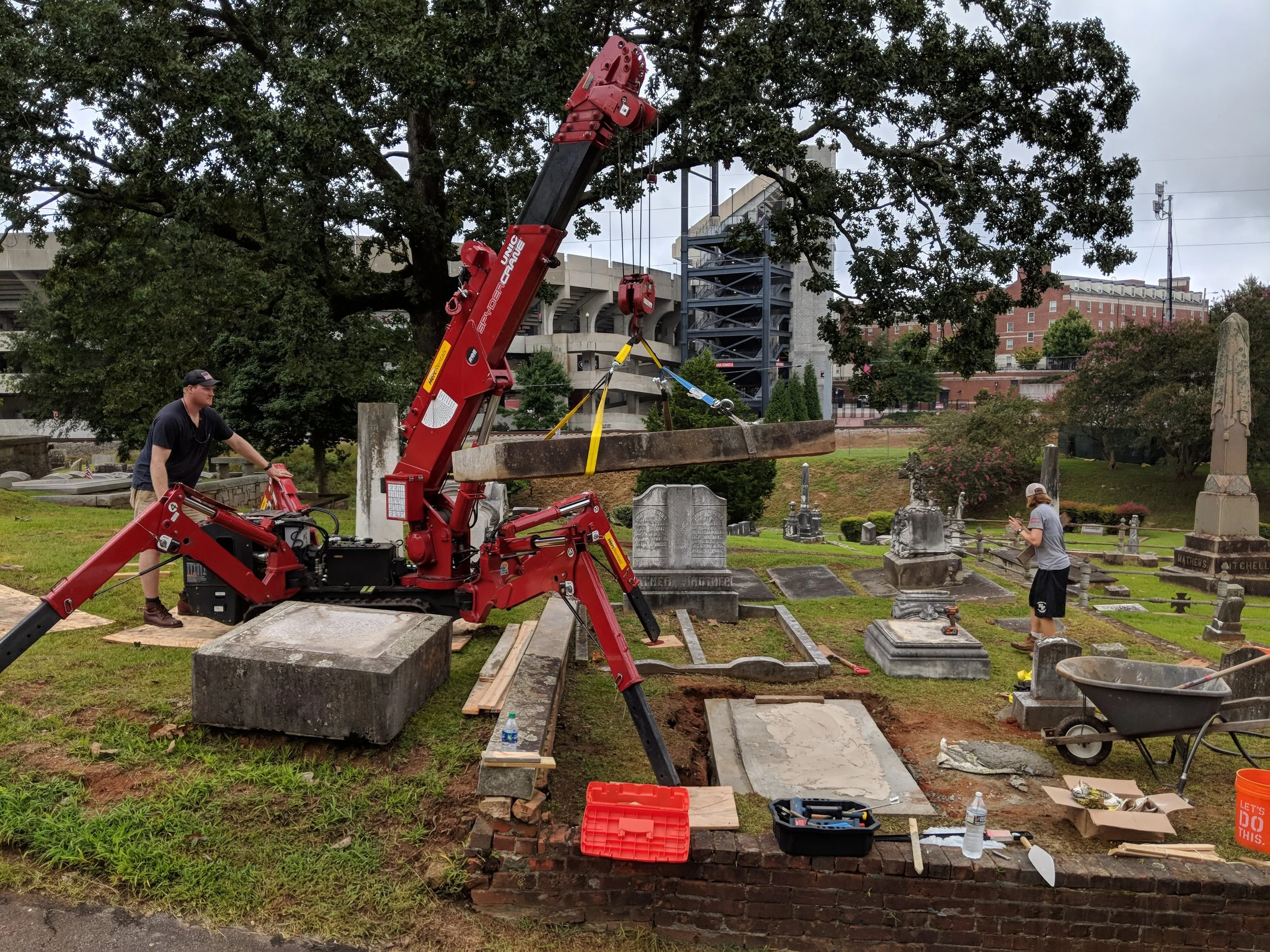
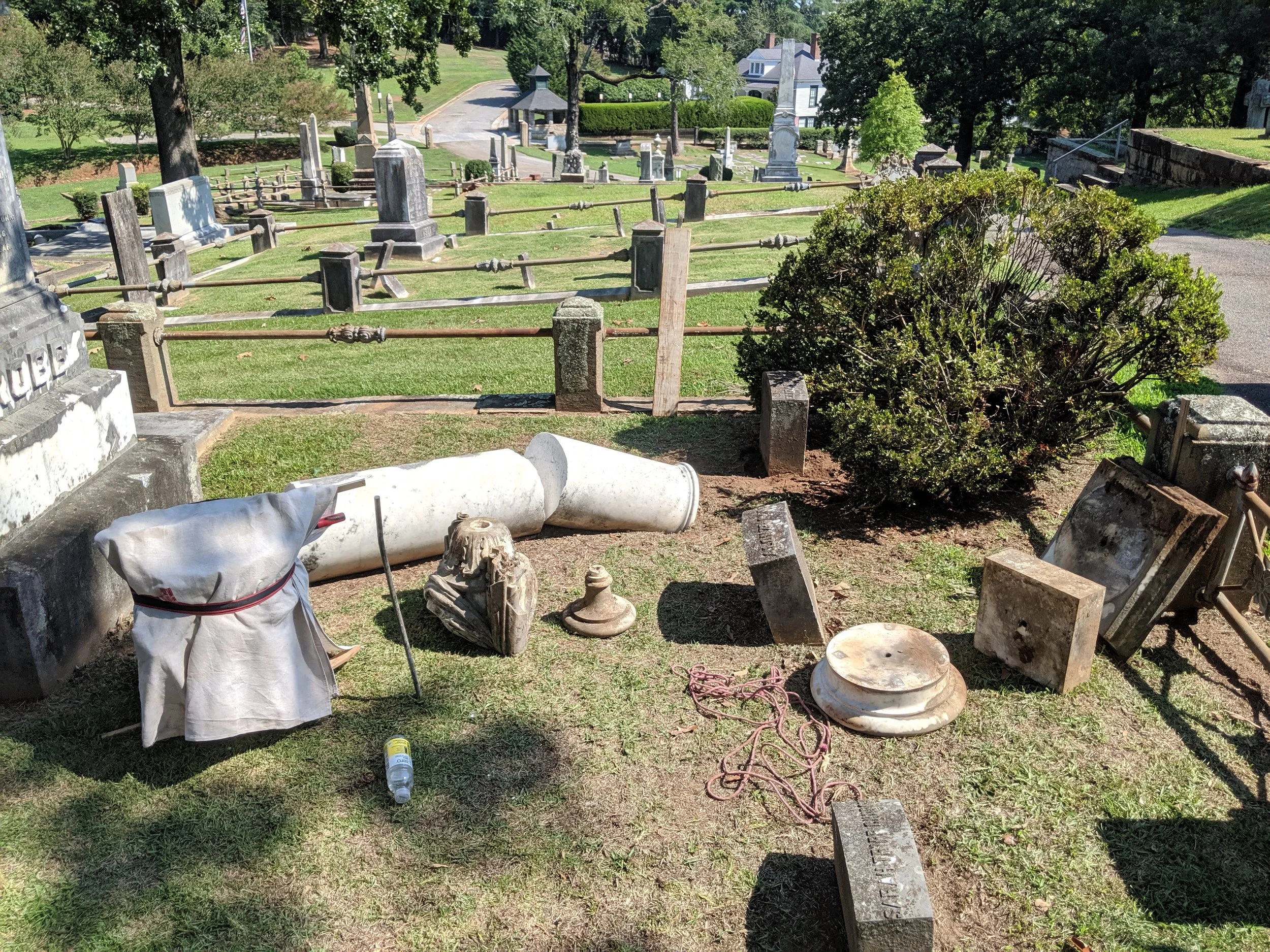
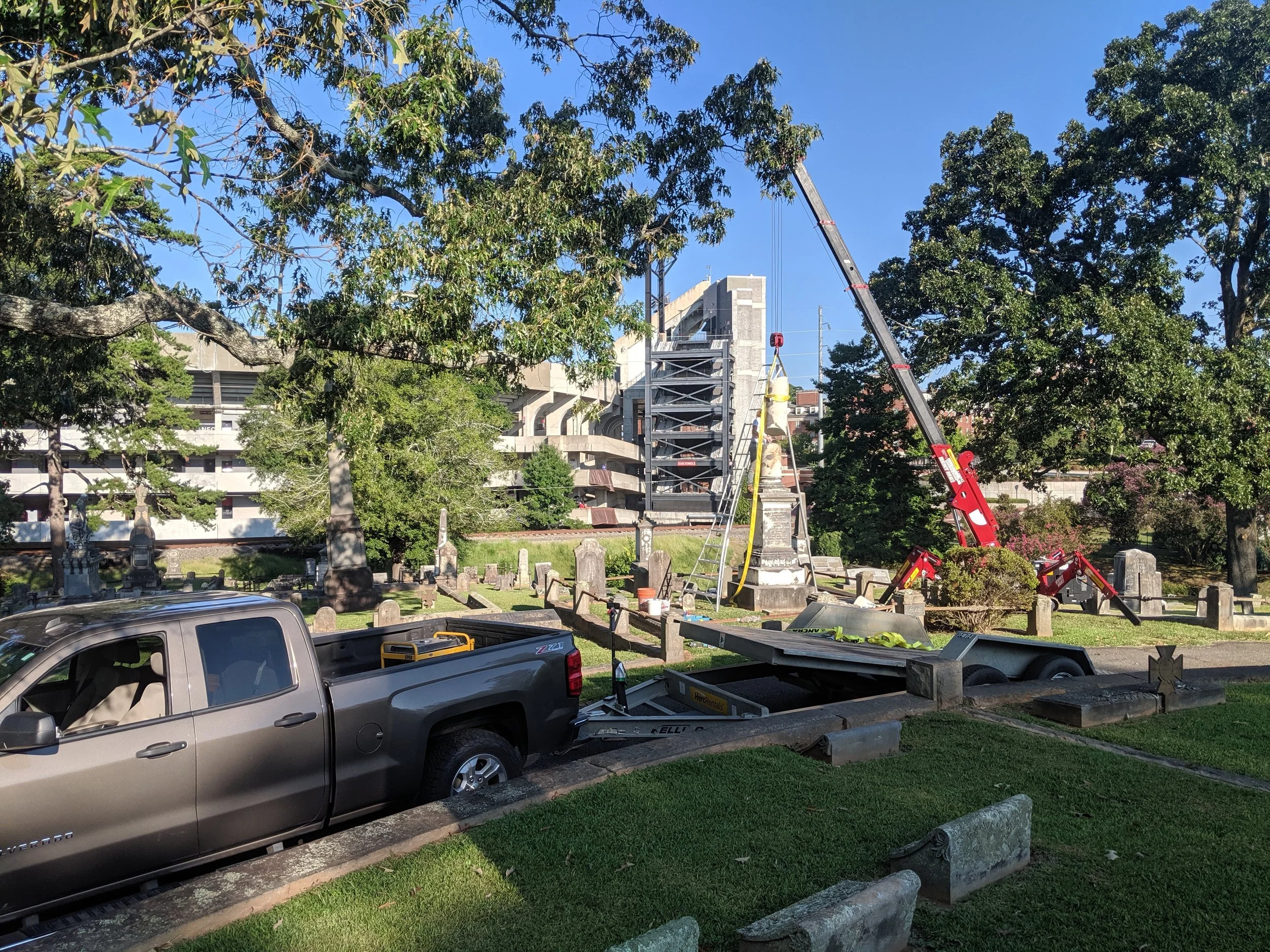
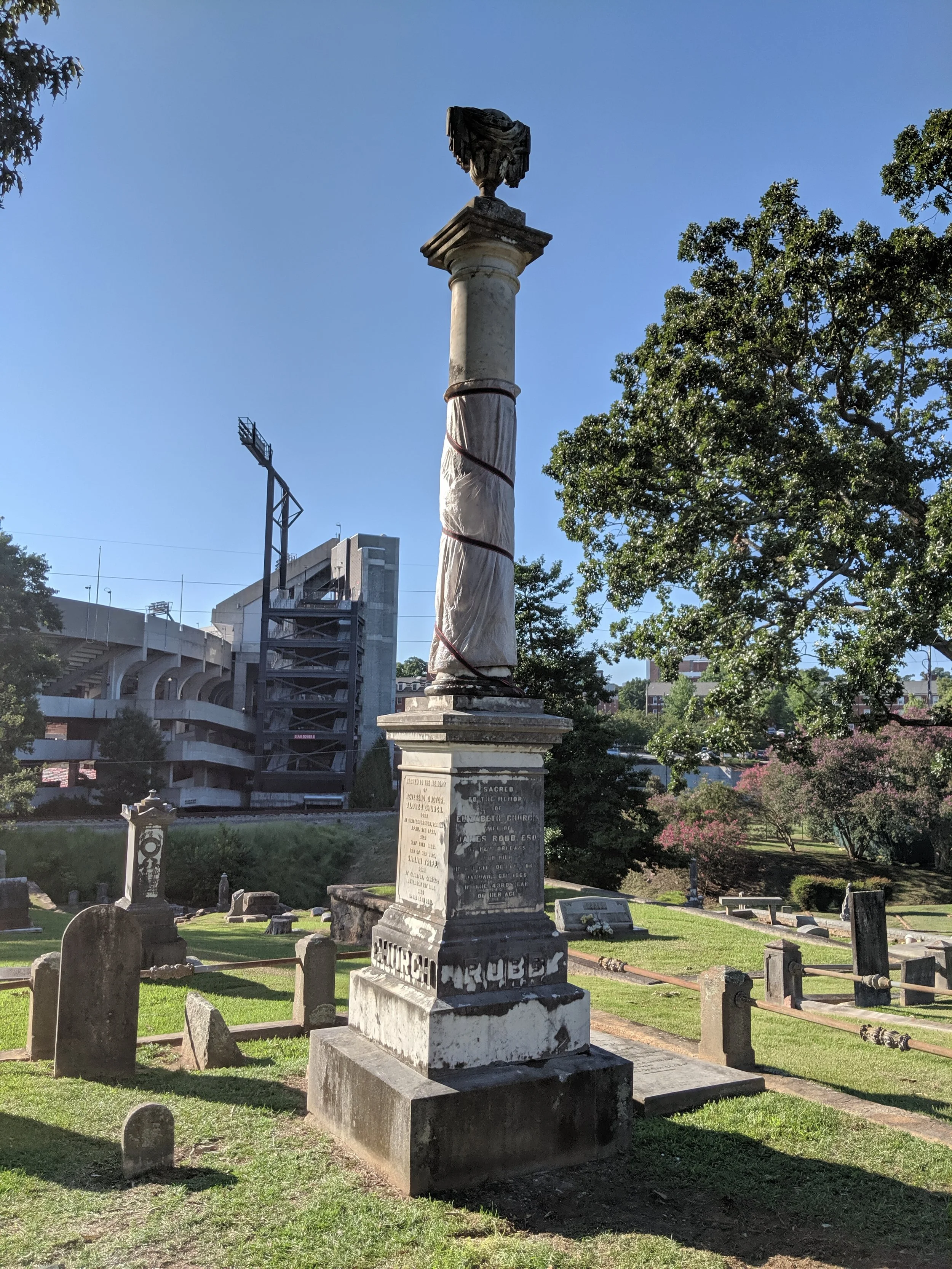
On two occasions, we utilized a spider crane—one of our most valuable tools for complex restorations. This compact, track-mounted crane can access tight or uneven spaces and stabilizes itself using adjustable outriggers. It allowed us to safely dismantle large monuments, revealing unstable foundations composed of loose granite. After removing compromised footings, we poured new, reinforced concrete foundations to provide long-term stability. In one case, a column with a severe midsection break required additional reinforcement using non-corrosive pins and epoxy. Repairs were then finished with fill mortar and surface cleaning to blend the restoration work. Throughout these projects, we also coordinated with the grounds team to address hazardous tree limbs and improve overall site safety.
