
Bessie Branham Park, Atlanta, Georgia
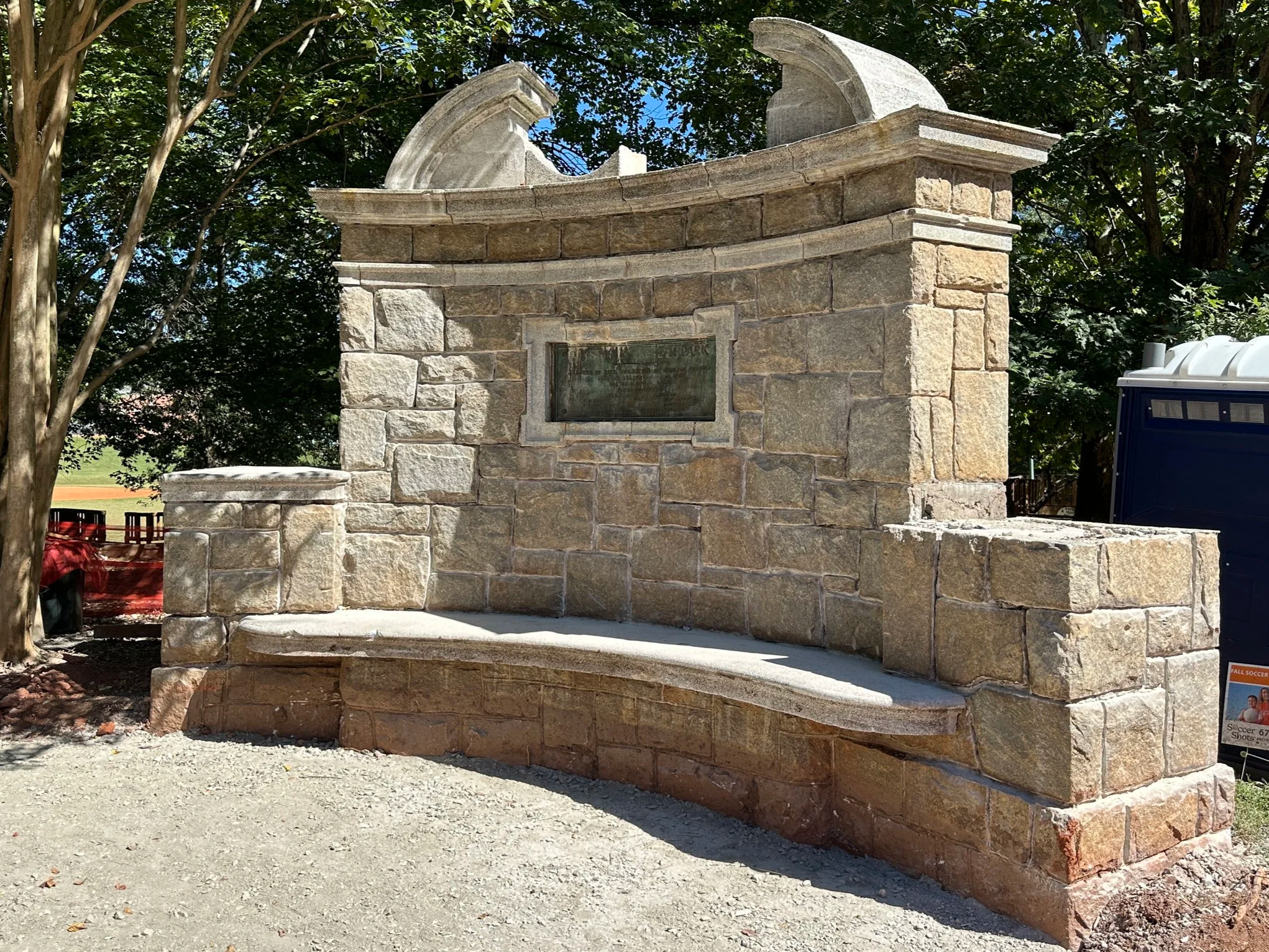
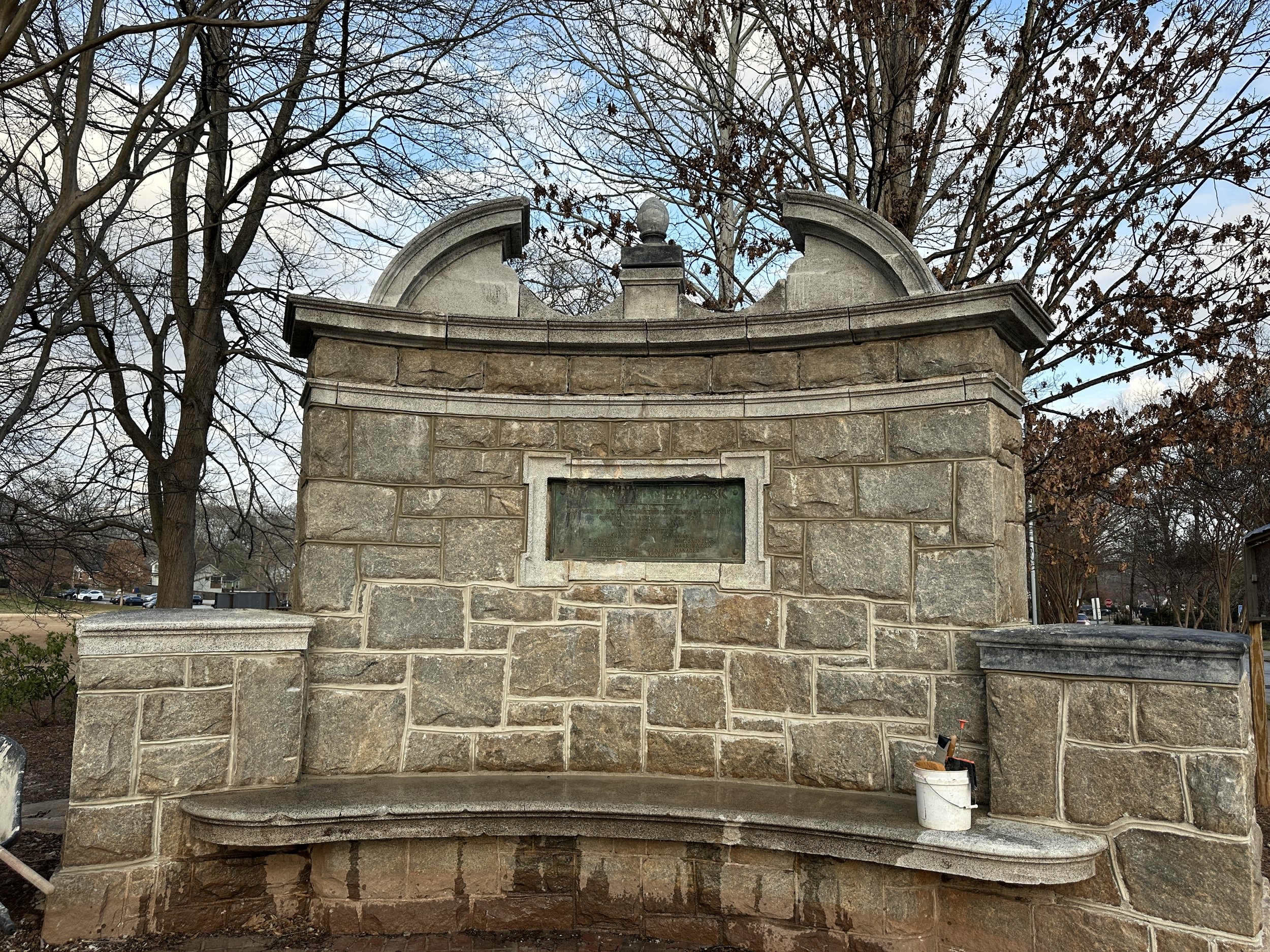
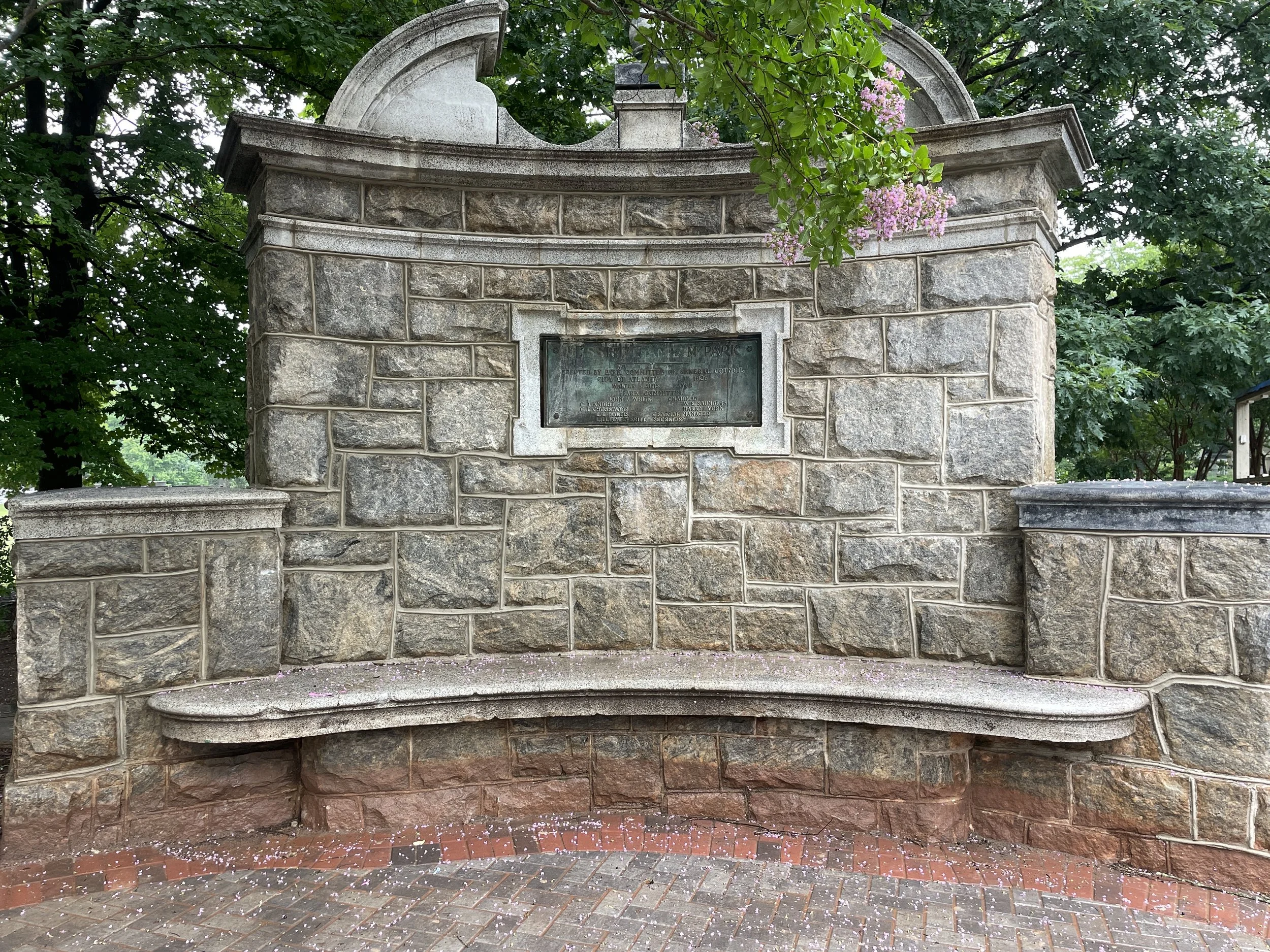
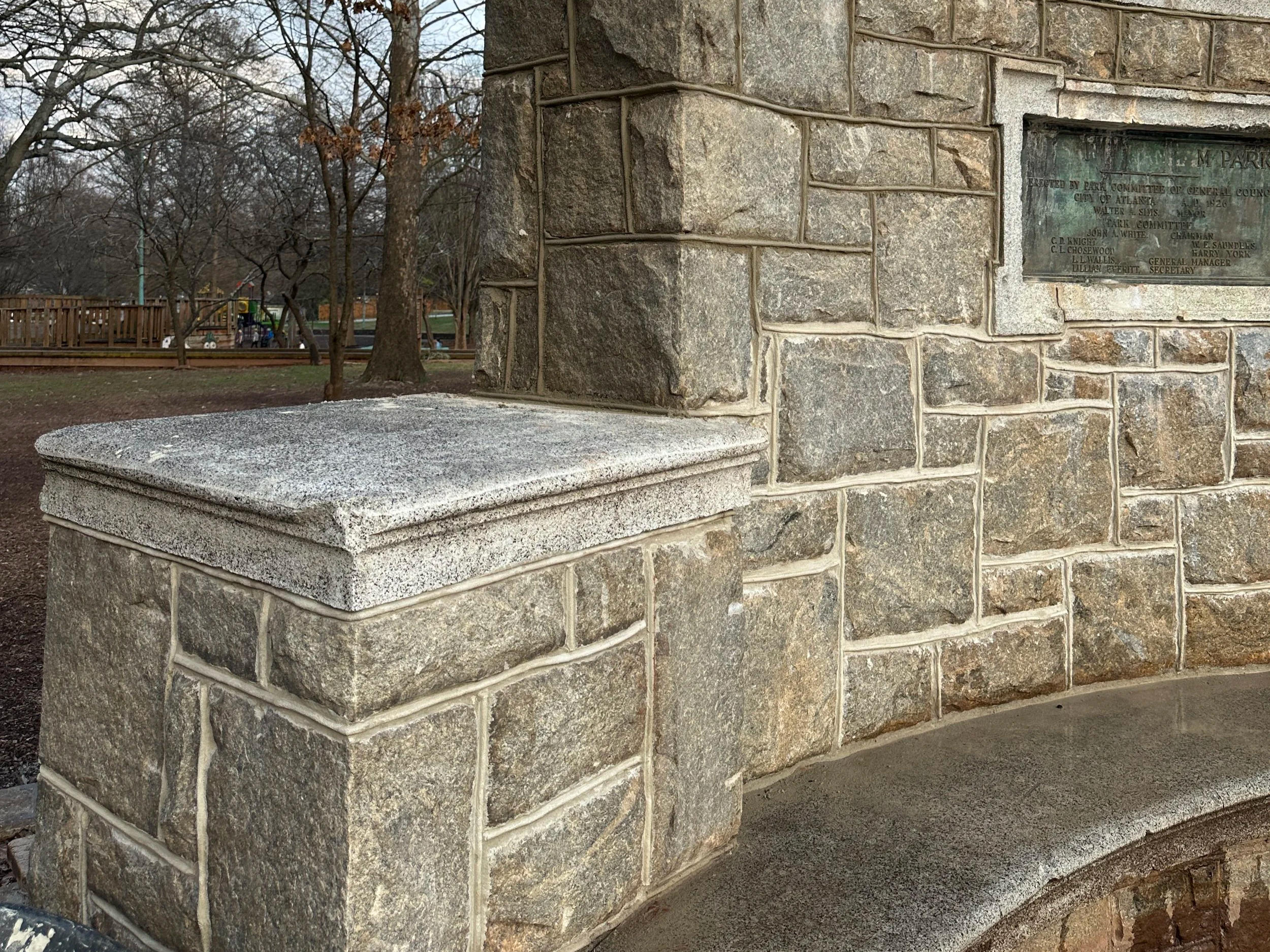
In the fall of 2024, we were asked to participate in the revitalization of Bessie Branham Park, specifically focusing on the 1924 granite entrance at the park’s southwest corner. Designed similarly to the entrance at Grant Park, Bessie Branham features two granite entryways with cast concrete acorn finials and capstones, bronze plaques, and decorative bead joints.
After meeting with a representative from the Bessie Branham Renewal Project, we were selected to undertake restoration of the entrance in preparation for new plaza brickwork and landscaping. This multi-year effort also includes improvements to the park’s 39 acres and playgrounds, led by other contractors. After coordinating with the broader project team to avoid conflicts, we began work in the winter of 2024, accounting for potential weather delays.
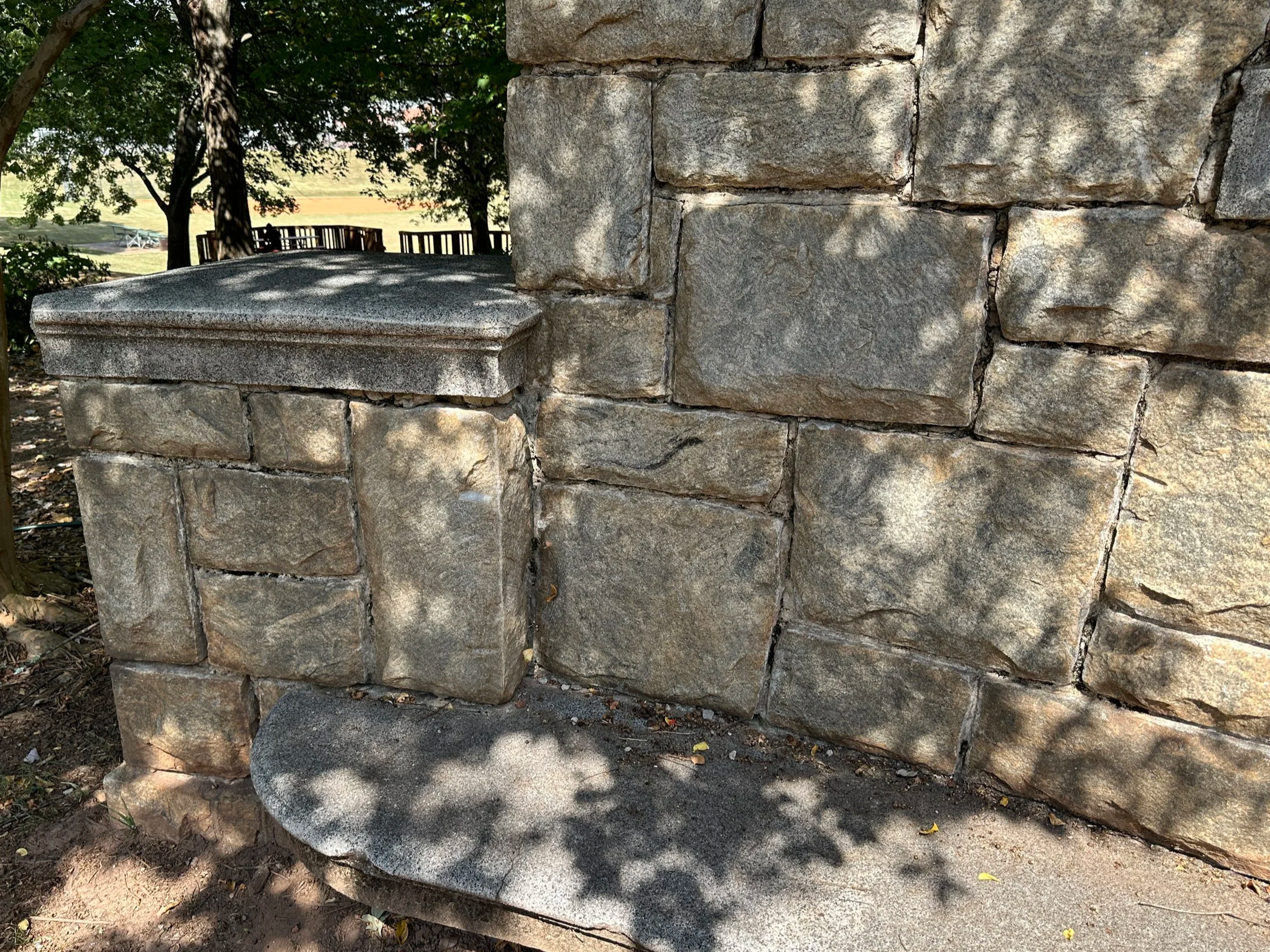
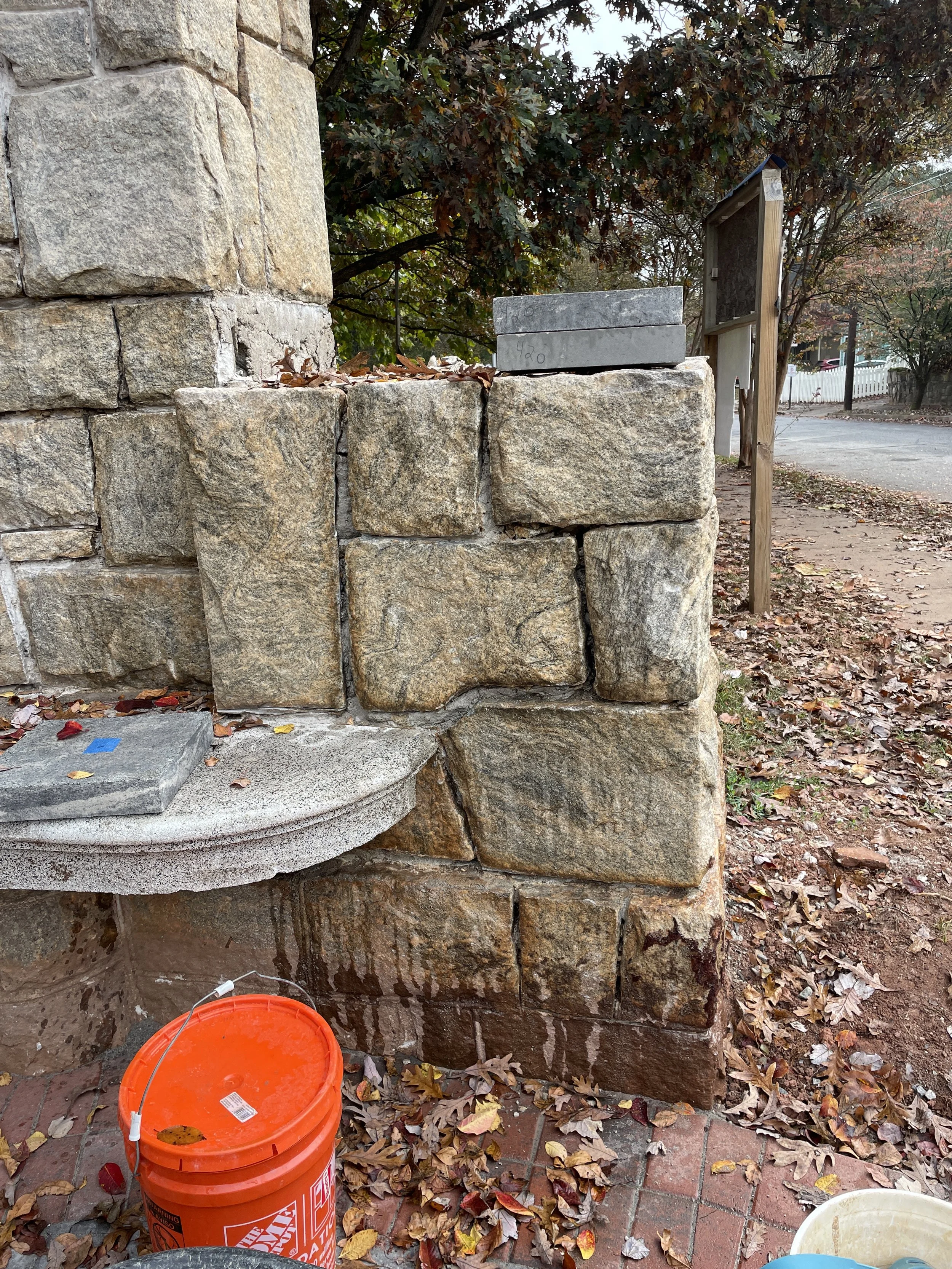
We started by assessing appropriate cleaning methods for the bronze plaques embedded within the entryways and coordinating with contractor Manny Leja to replace and recast missing decorative elements. Once our plan was in place and replacement pieces were ordered, we began cleaning the plaques and stonework with assistance from Lauren Reeves. Using pressure washing, chisels, and grinders, we removed years of dirt, organic buildup, and deteriorated mortar.
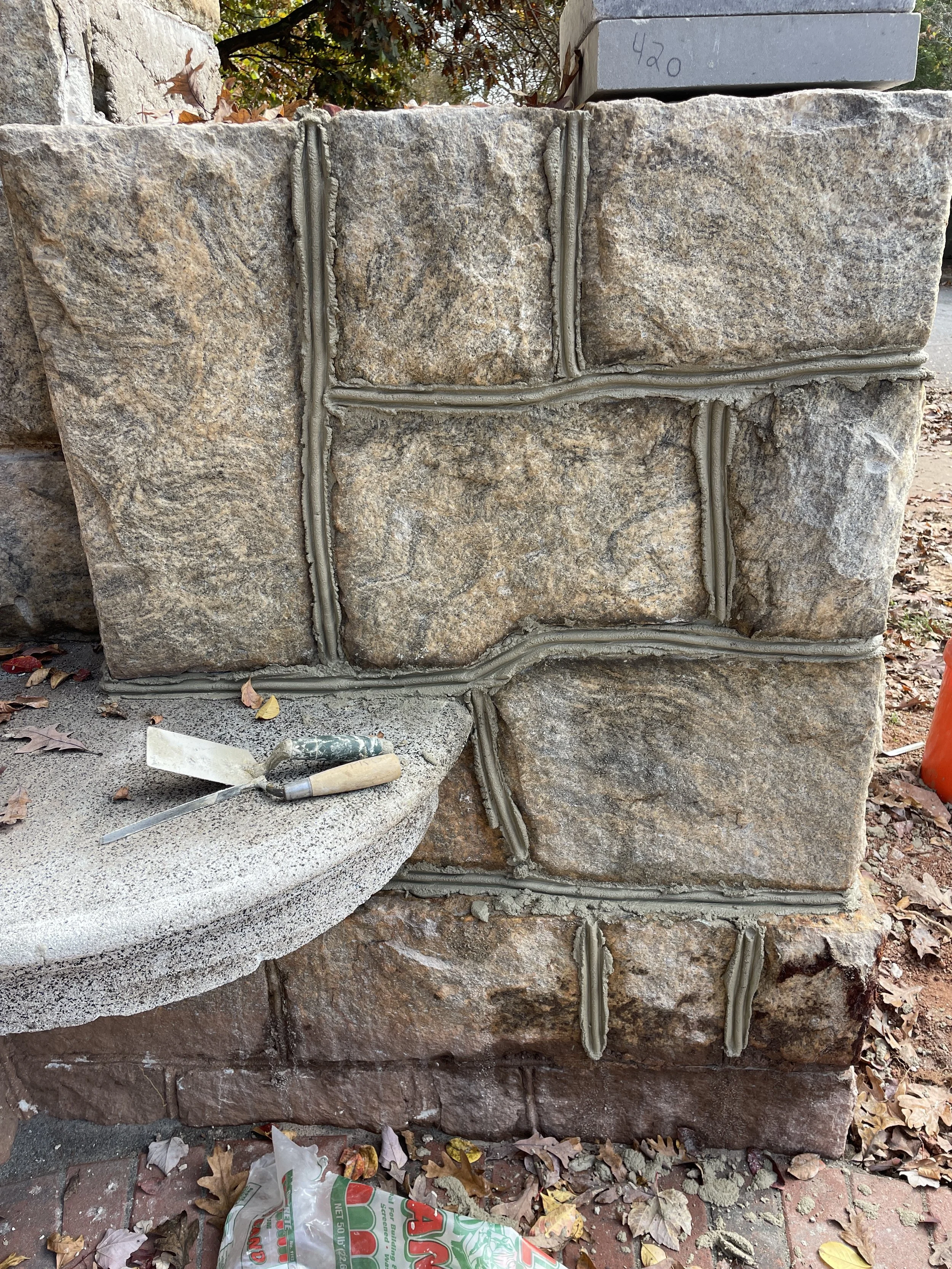
Structurally, the stones were stable and well set; however, the existing bead joints and some previous repairs required attention and replacement. Using existing examples for size and color, we developed a compatible mortar mix and began repointing. Over several weekends, we packed new mortar into the joints, allowed it to cure, and then finished the decorative bead work.
Bead joints are primarily aesthetic, helping to refine transitions between rough stones and create a cleaner, more cohesive appearance. Using a 3/8-inch bead tool—kind of a curved mortar trowel—we shaped the joints, connecting and smoothing transitions between stones. The process requires patience and a careful eye, and multiple passes were made to ensure proper curing and consistency before removing excess mortar.
After completing the lower surfaces, we moved to the tops of the monuments, where replacement cast elements had been installed. Because these components feature more defined architectural profiles, we used flush, smooth joints rather than bead joints.
We concluded by cleaning the site, protecting the work for proper curing, and ultimately unveiling the restored entrance as the neighborhood prepared for landscaping and its spring events. In the following weeks, we returned to remove protective coverings and have continued to check in as work on the plaza and surrounding park progresses.
